


Countertop seams are not always obvious, but they usually cannot be made completely invisible. A well-planned seam can be placed, color-matched, and finished so it blends into the slab pattern instead of becoming the first thing you notice.
At Granite Depot of Myrtle Beach, we talk about seams early because they affect how the finished countertop looks in real life. Homeowners asking about granite countertops in Briarcliffe Acres, SC often worry that a seam will ruin the look of the kitchen, but the truth is more practical: seams are normal, and good fabrication makes a major difference.
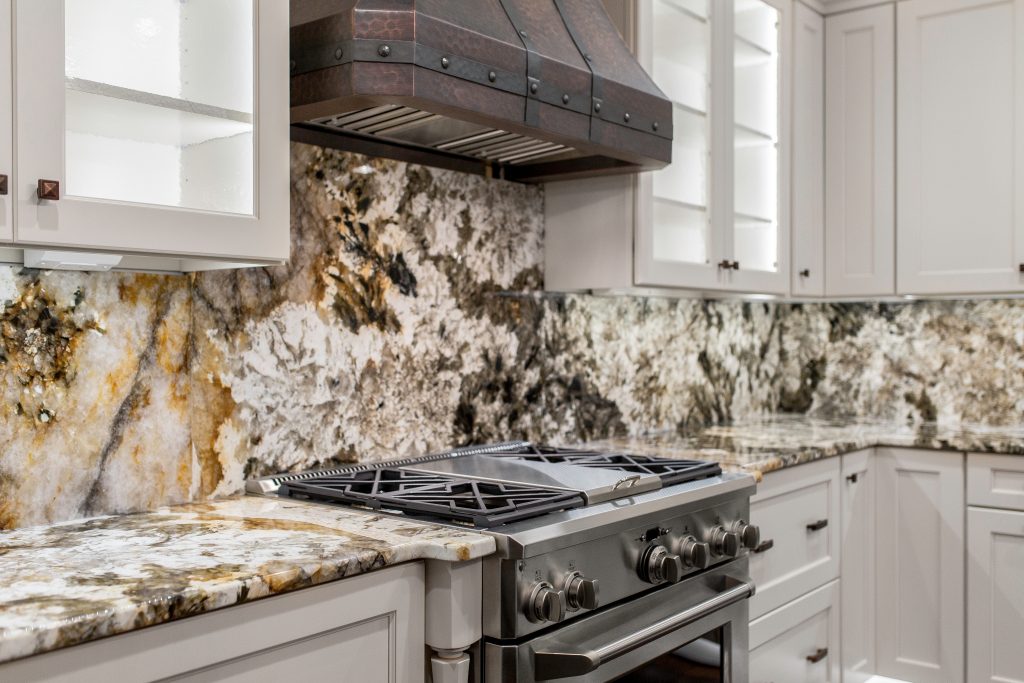
Are countertop seams always visible?
Countertop seams are usually slightly visible if you look closely, but they should not look wide, uneven, raised, or careless. The goal is not magic. The goal is a tight, clean seam that works with the slab movement and kitchen layout.
A seam may be easier to hide in darker stone, consistent quartz, or granite with busy natural movement. It may be more visible in plain white quartz, dramatic marble, or stone with long continuous veins.
| Surface type | Seam visibility | Why |
|---|---|---|
| Dark granite | Lower | Dark colors and movement help disguise seams |
| Busy granite | Lower | Natural pattern breaks up the seam line |
| Plain quartz | Higher | Solid colors show lines more clearly |
| Marble | Medium to high | Veining must be matched carefully |
| Quartzite | Medium | Movement can help or make seams harder to place |
A seam should never look like a mistake. If it does, the issue is usually planning, layout, fabrication, or installation.
Can countertop seams be hidden completely?
Countertop seams cannot usually be hidden completely, but they can often be minimized. The fabricator can choose a better seam location, match the stone pattern, use color-matched adhesive, and finish the joint carefully.
For granite countertops in Briarcliffe Acres, SC, seam planning depends on slab size, cabinet layout, sink placement, island size, and access into the home. Some kitchens need seams because the countertop sections are too large to transport or install safely in one piece.
The best seam is often the one placed where the eye does not naturally stop. Near a sink, corner, appliance break, or pattern transition may be better than the center of a long open run.
Why do countertops need seams?
Countertops need seams when the slab is not large enough, the layout is too long, the stone is too heavy, or the installation path does not allow one large piece to be carried safely. Seams are often a structural and practical decision.
Granite, quartz, marble, and quartzite are heavy materials. A long kitchen run, L-shaped layout, large island, or full-height backsplash may require multiple pieces.
Common reasons for seams include:
- Long countertop runs
- L-shaped or U-shaped kitchens
- Large islands
- Sink or cooktop cutouts
- Slab size limits
- Doorway, stairway, or hallway access
- Material weight and handling safety
A no-seam design may sound ideal, but it is not always the safest or smartest choice.
Which materials hide seams best?
Granite often hides seams well because many slabs have natural movement, speckling, or color variation. Quartz can hide seams well when the pattern is consistent, but solid colors may show seams more clearly.
Marble and quartzite require careful planning because their veining can make a seam stand out if the pattern is interrupted. A good layout can still make them look beautiful, but the seam strategy matters.
| Material | Seam-hiding ability | Best seam strategy |
|---|---|---|
| Granite | Good | Use natural movement to disguise the joint |
| Quartz | Good to moderate | Match color and avoid placing seams in open focal areas |
| Marble | Moderate | Align veining as carefully as possible |
| Quartzite | Moderate to good | Plan around movement and slab direction |
At Granite Depot of Myrtle Beach, we recommend viewing the full slab when possible. Small samples cannot show where veins, color shifts, and seam lines may land.
How much do countertops cost when seams are involved?
Countertop pricing depends on material, square footage, slab level, layout, seam planning, edge profile, sink cutouts, backsplash, fabrication, delivery, and installation. Our typical starting ranges are granite from $42 per square foot, quartz from $55, marble from $55, and quartzite from $75.
Seams do not automatically mean the project is more expensive. The cost depends on the full layout and fabrication work. A large island with no seam may sometimes cost more than a perimeter countertop with a clean planned seam.
| Material | Starting price | Seam planning note |
|---|---|---|
| Granite | From $42/sq ft | Often hides seams well with natural movement |
| Quartz | From $55/sq ft | Solid colors may show seams more |
| Marble | From $55/sq ft | Vein matching is important |
| Quartzite | From $75/sq ft | Dramatic patterns require careful layout |
For granite countertops in Briarcliffe Acres, SC, we suggest asking for a full estimate that explains fabrication, installation, sink cutouts, edge details, backsplash pieces, and likely seam locations.

Where should countertop seams be placed?
Countertop seams should be placed where they are structurally safe and visually least noticeable. Good seam placement balances appearance, slab size, cabinet support, and installation access.
A seam near a sink can sometimes work because the sink cutout already breaks the surface. A seam near a corner may also be less noticeable. A seam across the center of a large open island is usually something we try to avoid when the material and slab size allow it.
| Seam location | Usually good? | Why |
|---|---|---|
| Near sink area | Often | Sink interrupts the surface visually |
| Inside corner | Often | Less visible from main view |
| Center of long open run | Sometimes | Depends on stone pattern |
| Center of island | Usually avoided | Island is a focal point |
| Near appliance break | Often | Natural stopping point |
The layout should be discussed before fabrication begins. Once stone is cut, seam placement is no longer easy to change.
How do fabricators make seams look better?
Fabricators improve seams through careful measuring, slab layout, clean cutting, adhesive color matching, leveling, and polishing. The installation team also needs to align the pieces tightly and support them correctly.
A good seam is not only about the line itself. It is about how the surrounding stone meets, how level the pieces are, and how the seam works with the pattern.
A clean seam usually depends on:
- Accurate template
- Strong cabinet support
- Smart slab layout
- Clean fabrication cuts
- Color-matched seam adhesive
- Proper leveling during installation
- Careful final finishing
Granite Depot of Myrtle Beach handles selection support, fabrication, delivery, and installation coordination so seam planning stays connected from the first measurement to the final fit.
How long does countertop fabrication and installation take?
Most standard countertop projects take about 7-10 days after template. The timeline depends on material availability, slab layout, seam planning, edge profile, sink cutouts, backsplash pieces, fabrication, and installation scheduling.
For granite countertops in Briarcliffe Acres, SC, cabinets should be installed, level, and secure before final template. If cabinets move after measurement, seams and countertop fit can be affected.
A typical countertop process includes:
- Choose granite, quartz, marble, quartzite, or another material
- Review slab layout and seam expectations
- Confirm sink, faucet, edge, and backsplash details
- Complete the template
- Fabricate the countertop pieces
- Deliver and install the finished surfaces
- Finish seams and final adjustments
The earlier seam expectations are discussed, the fewer surprises there are on installation day.
Can seams be avoided on kitchen islands?
Seams can sometimes be avoided on kitchen islands if the slab is large enough and the island size allows it. Large islands, oversized overhangs, waterfall sides, and dramatic veining may make seam planning more complex.
A single-piece island often looks beautiful, but it must also be safe to fabricate, transport, carry, and install. Stone is heavy, and bigger is not always easier.
If a seam is needed on an island, the best approach is to place it with the pattern in mind. On bold stone, the vein direction matters as much as the seam location.
Do seams affect durability?
A properly installed seam should not make the countertop weak in normal daily use. The countertop still needs correct cabinet support, careful installation, and reasonable use.
Seams should not be used as cutting lines, impact zones, or places to stand on. Heavy pressure directly on a seam is never a good idea.
Granite, quartz, marble, and quartzite can all perform well with seams when the fabrication and installation are done correctly.
What mistakes make seams more noticeable?
The biggest mistake is ignoring seam placement until installation day. By then, most options are already limited.
Another mistake is choosing a material with strong veining without asking how the slab will be laid out. A dramatic slab can look beautiful, but the seam must be planned around the movement.
Avoid these common seam problems:
- Choosing from a small sample only
- Not asking where seams may be placed
- Placing seams in the main focal point when avoidable
- Ignoring vein direction
- Comparing prices without checking fabrication quality
- Installing stone over uneven cabinets
- Forgetting backsplash and edge details
At Granite Depot of Myrtle Beach, we prefer to explain seams before cutting begins. For granite countertops in Briarcliffe Acres, SC, that conversation helps homeowners understand what can be hidden, what can be minimized, and what is normal.

FAQ: Countertop Seams
Are countertop seams always visible?
Seams are usually slightly visible up close, but a well-made seam should not stand out from normal viewing distance.
Can granite seams be hidden?
Granite seams can often be minimized because natural movement and darker patterns help disguise the joint.
Which countertop material hides seams best?
Busy granite and patterned quartz usually hide seams well. Plain white or solid surfaces may show seams more.
Do seams make countertops weaker?
A properly installed seam should not weaken the countertop during normal use.
How long does countertop installation take?
Most standard projects take about 7-10 days after template, depending on material, fabrication, and installation details.
Can I choose where the seam goes?
You can discuss preferred seam placement, but the final decision depends on slab size, layout, support, and installation safety.
Are seams included in the countertop price?
Seam planning is part of fabrication and installation, but the full quote should explain material, cutouts, edges, backsplash, and labor.
Where can I plan countertops with better seam placement near Briarcliffe Acres?
Granite Depot of Myrtle Beach is located in Myrtle Beach, SC and serves Briarcliffe Acres, SC and nearby areas with countertop selection, slab layout guidance, fabrication, delivery, installation, kitchen countertops, bathroom vanities, islands, and backsplashes. We work with granite, quartz, marble, quartzite, and other surfaces for homes where both appearance and daily function matter.
If you are planning granite countertops in Briarcliffe Acres, SC, we can help you understand seam placement before fabrication begins, so the finished countertop looks clean, balanced, and properly installed.