

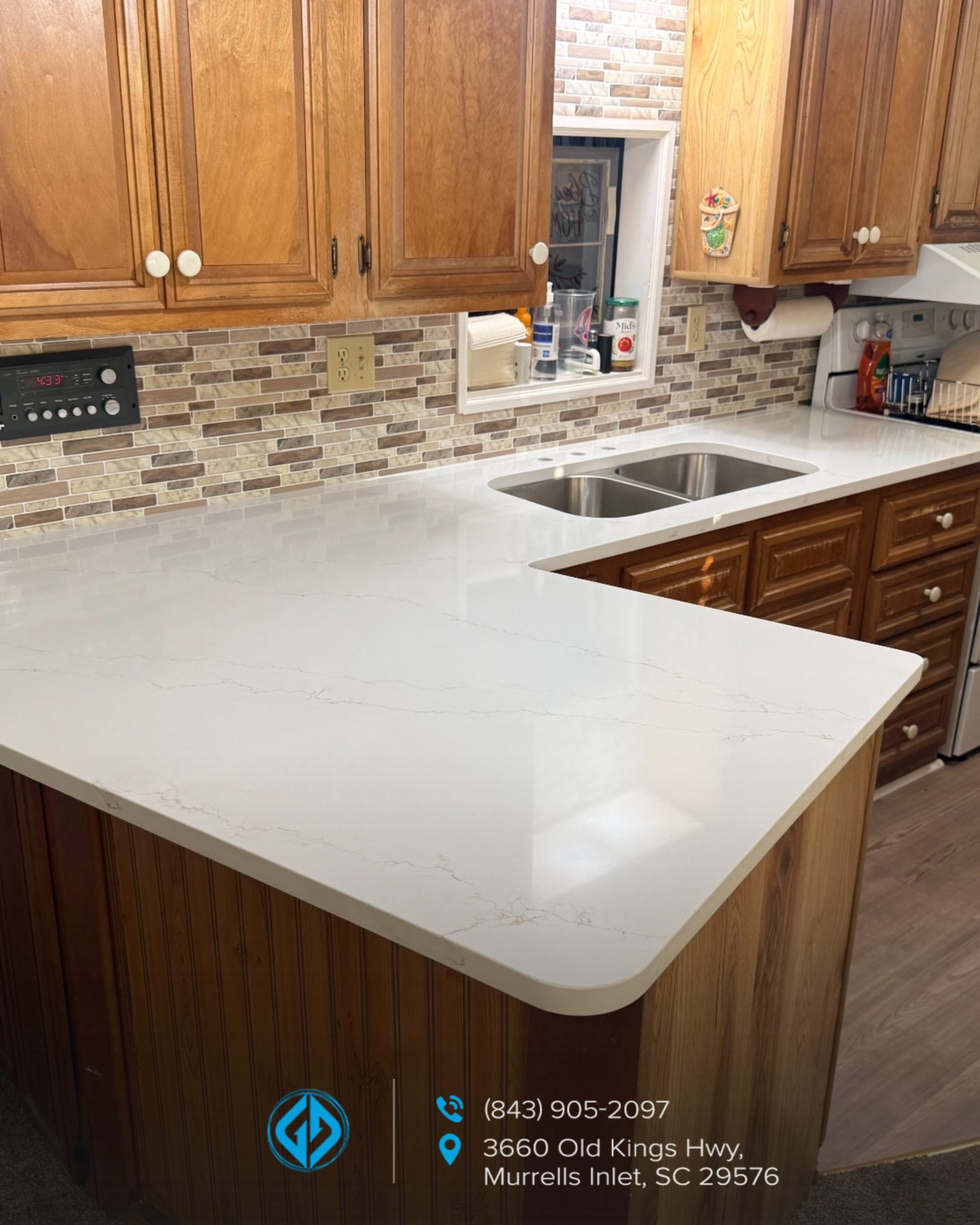
A countertop pattern may feel too busy after installation when the slab has strong movement, high contrast, large veining, or color changes that cover a large area of the kitchen. A small sample can look beautiful, but the full installed surface may feel much louder once it stretches across an island, perimeter counters, and backsplash areas.
At Granite Depot of Myrtle Beach, we always look at the whole kitchen before recommending a patterned slab. Cabinets, flooring, backsplash, lighting, island size, and wall color all affect how busy a countertop feels. For homeowners comparing granite stores in Briarcliffe Acres, SC, the safest choice is not always the calmest slab. It is the slab that fits the room’s scale.

Why does a countertop pattern look busier after installation?
A countertop pattern looks busier after installation because the surface area becomes much larger than the sample. What looked like one pretty vein on a small piece may become several strong lines across the full kitchen.
This happens most often with dramatic granite, marble, quartzite, and bold quartz designs. A slab viewed vertically in a showroom also feels different when it is installed horizontally under cabinet lighting. Once the countertop is next to the sink, range, backsplash, and cabinets, every pattern competes with nearby finishes.
| Pattern Feature | Why It Can Feel Busy |
|---|---|
| High contrast veining | Pulls the eye quickly |
| Large movement | Can dominate a small kitchen |
| Many colors | Harder to coordinate with cabinets |
| Strong directional lines | May look awkward at seams |
| Speckled movement | Can feel active across long runs |
| Glossy finish | Reflects light and increases visual detail |
A busy pattern is not bad. It just needs enough room and the right surrounding materials.
Is granite more likely to look busy than quartz?
Granite can look busier than quartz because it has natural variation, minerals, speckles, waves, and color shifts. Quartz is usually more controlled, but some quartz patterns can also feel busy if the veining is large or high contrast.
Granite works well when homeowners want natural character. It can also hide crumbs, fingerprints, and daily marks better than plain solid surfaces. The key is viewing enough of the slab to understand the movement before fabrication.
Quartz is helpful when the homeowner wants a calmer, more predictable look. Marble and quartzite can be more dramatic because the veining may become the main feature of the room.
How can I tell from the slab if the pattern is too strong?
You can tell a pattern may be too strong by stepping back and viewing the full slab from a distance. Do not judge only from 12 inches away.
Stand back the way you would look at the kitchen from the doorway. Notice where your eye goes first. If the slab immediately feels like the loudest thing in the room, it may need quieter cabinets, a simple backsplash, and minimal hardware.
For granite stores in Briarcliffe Acres, SC, this full-slab viewing step matters because countertop patterns change once they are cut into kitchen sections. A calm corner of the slab may not represent the full surface.
Does kitchen size affect how busy a countertop feels?
Yes, kitchen size affects how busy a countertop feels. A large kitchen can usually handle more movement than a small kitchen.
In a small kitchen, a bold slab may cover most of the visible surfaces. That can make the room feel crowded. In a larger kitchen, the same slab may look balanced because there is more space, more cabinetry, and more visual breathing room.
| Kitchen Type | Pattern That Usually Works Best |
|---|---|
| Small galley kitchen | Low-contrast quartz or calm granite |
| Medium kitchen | Soft veining or medium granite movement |
| Large kitchen | Bolder granite, quartzite, or marble-look quartz |
| Large island kitchen | Statement island with calmer perimeter |
| Open-concept kitchen | Pattern must work from multiple views |
The larger the surface, the more important pattern scale becomes.
Should the island have a different pattern than the perimeter?
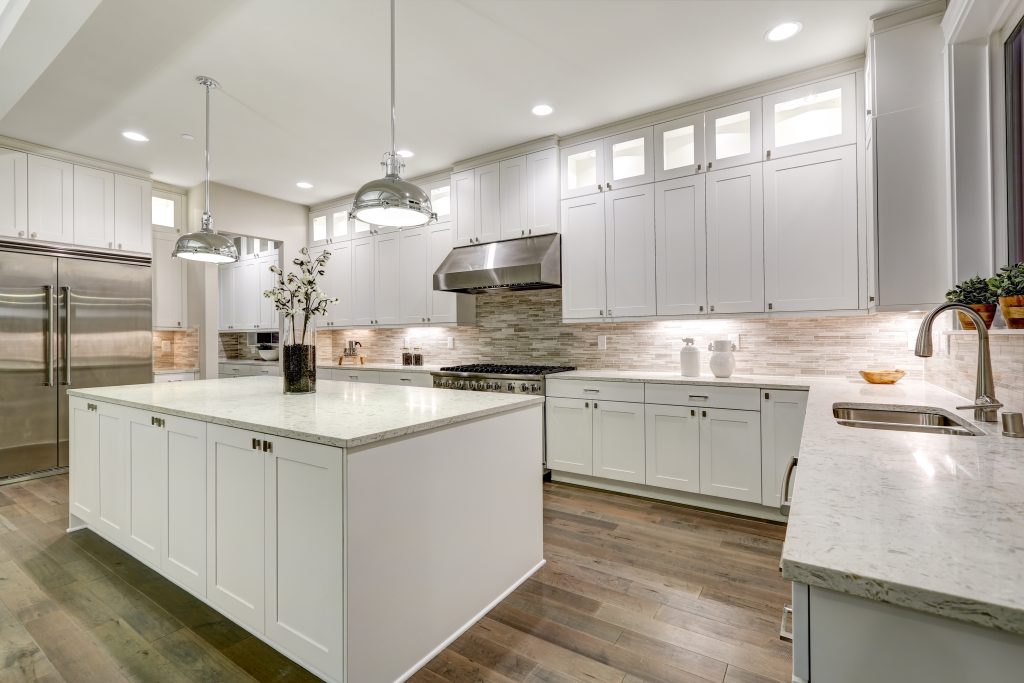
The island can have a stronger pattern than the perimeter because it already acts like a focal point. This is often the best way to use a dramatic slab without overwhelming the whole kitchen.
A bold granite or quartzite island can look balanced with quieter quartz or granite around the walls. A marble-look quartz island can also work well when the perimeter counters stay simple. The key is giving one surface the lead role.
Using the same bold material everywhere can work in a large kitchen, but it needs careful planning. Seams, vein direction, backsplash choice, and cabinet color all become more noticeable.
How do cabinet colors affect countertop busyness?
Cabinet colors affect countertop busyness because they create the background for the stone. Simple cabinet colors make bold countertops easier to handle.
White, warm white, cream, greige, soft gray, light wood, and simple dark cabinets can all work, but undertones need to match. A busy countertop with busy wood grain, decorative doors, patterned tile, and bold hardware can feel crowded. A busy countertop with simple cabinets often feels intentional.
Granite Depot of Myrtle Beach usually recommends choosing one main statement. If the countertop has heavy movement, the cabinets and backsplash should usually stay calmer.
What backsplash should I choose with a busy countertop?
A simple backsplash is usually best with a busy countertop. The backsplash should connect the cabinets and countertop, not compete with them.
Soft white tile, cream tile, pale gray tile, handmade-look tile, low-contrast subway tile, or a matching slab backsplash can all work. A bold patterned tile beside dramatic granite or quartzite can make the kitchen feel visually crowded.
Backsplash height also matters. A full-height backsplash made from the same stone can look beautiful, but it makes the pattern much more dominant. A tile backsplash may soften the look when the countertop already has strong movement.
Does countertop finish make a pattern look busier?
Yes, finish can make a pattern look busier or calmer. Polished finishes reflect more light and can make color and veining look stronger.
Honed finishes often feel softer because they reduce shine. Leathered finishes can give granite and quartzite more texture while controlling glare. Matte quartz can feel calmer than glossy quartz, but some matte finishes may show fingerprints depending on color.
| Finish | Visual Effect | Best Use |
|---|---|---|
| Polished | Brighter and more reflective | Shows color depth |
| Honed | Softer and calmer | Reduces glare |
| Leathered | Textured and natural | Works well with granite |
| Matte quartz | Clean and modern | Good for softer designs |
A dramatic pattern in a polished finish will usually feel stronger than the same general color family in a softer finish.
How do materials compare for pattern, durability, and maintenance?
Granite, quartz, marble, and quartzite all have different pattern behavior and maintenance needs. The best choice depends on the look, use, and level of care the homeowner wants.
| Material | Pattern Control | Heat Resistance | Stain Resistance | Maintenance Level |
|---|---|---|---|---|
| Granite | Natural variation | High | Good when sealed | Moderate |
| Quartz | More consistent | Moderate | Very good | Low |
| Marble | Natural veining | Good but sensitive | Moderate | Higher |
| Quartzite | Natural movement | High | Good when sealed | Moderate |
Granite and quartzite can look very rich, but slab viewing is important. Quartz is easier for homeowners who want a controlled design. Marble is beautiful, but its veining and maintenance should be understood before choosing it.
How much do patterned countertops cost?
Countertop pricing depends on material, square footage, slab selection, edge profile, sink cutouts, cooktop openings, seams, backsplash pieces, fabrication, delivery, and installation. Granite starts around $42 per square foot, quartz around $55, marble around $55, and quartzite around $75.
| Material | Starting Price | Pattern Note |
|---|---|---|
| Granite | From about $42 per sq. ft. | Natural speckles, movement, and color shifts |
| Quartz | From about $55 per sq. ft. | More controlled veining and color |
| Marble | From about $55 per sq. ft. | Natural veining with higher care needs |
| Quartzite | From about $75 per sq. ft. | Strong natural movement and premium look |
Granite Depot of Myrtle Beach reviews the full layout before final pricing. For granite stores in Briarcliffe Acres, SC, a useful estimate should include material, templating, fabrication, installation, edge work, sink cutouts, seam planning, slab layout, and backsplash options.
How long does countertop fabrication and installation take?
Most countertop projects take about 7-10 days after final measurements. This includes templating, slab layout, fabrication, edge finishing, sink cutouts, cooktop openings, scheduling, delivery, and installation.
Cabinets must be installed, level, and secure before templating. Sink type, faucet holes, cooktop opening, edge profile, overhangs, seams, and backsplash height should be confirmed before cutting starts. Patterned countertops need careful layout because veining, speckles, and movement can change how the final kitchen feels.
At Granite Depot of Myrtle Beach, we plan this stage carefully because a busy pattern needs more attention than a plain surface. For granite stores in Briarcliffe Acres, SC, the 7-10 day timeline gives room for measurement, fabrication, and installation without rushing slab layout.
What mistakes make a countertop pattern feel too busy?
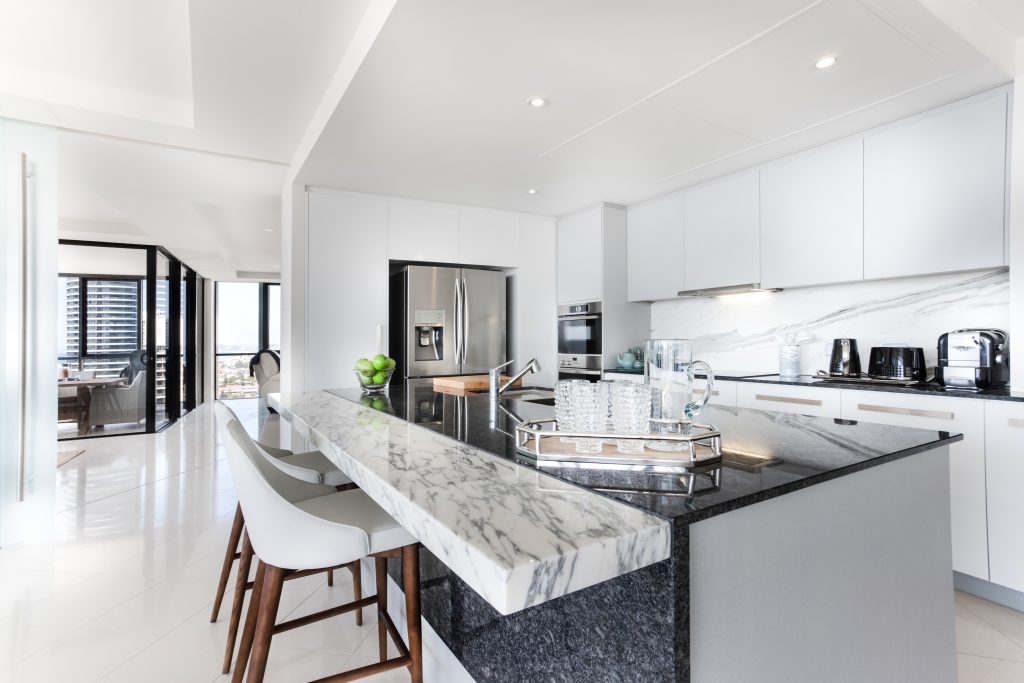
The biggest mistake is choosing a dramatic slab without checking it against cabinets, flooring, backsplash, wall color, and lighting. A countertop is never seen by itself after installation.
Another mistake is using several statement materials at the same time. Bold stone, detailed cabinet doors, patterned backsplash, colorful floors, and high-contrast hardware can all fight each other. One feature should lead.
Before choosing a patterned countertop, review:
- Full slab movement
- Kitchen size
- Island size
- Cabinet color
- Flooring undertone
- Backsplash sample
- Lighting
- Finish choice
- Seam placement
- Edge profile
- Daily cleaning habits
A pattern feels best when it has context.
FAQ: Countertop patterns that feel too busy
How do I know if a countertop pattern is too busy?
View the full slab from a distance and compare it with cabinets, flooring, backsplash, lighting, and kitchen size.
Are busy granite countertops outdated?
No. Busy granite can still work when the cabinets, backsplash, and flooring are kept simple.
Is quartz calmer than granite?
Usually, yes. Quartz patterns are often more controlled, while granite has natural variation and movement.
Should a small kitchen avoid bold countertop patterns?
Usually, softer patterns work better in small kitchens because there is less visual space to balance strong movement.
Can a busy countertop work on an island?
Yes. A dramatic island can look good when the perimeter counters, cabinets, and backsplash stay calmer.
How much do countertops start at?
Granite starts around $42 per square foot, quartz around $55, marble around $55, and quartzite around $75.
How long does countertop installation take?
Most projects take about 7-10 days after final measurements, depending on material, fabrication, cutouts, seams, and scheduling.
What should I ask before visiting granite stores in Briarcliffe Acres, SC?
Ask about full-slab viewing, pattern scale, seam placement, edge profiles, sink cutouts, backsplash planning, fabrication, installation, and maintenance.
Where can homeowners near Briarcliffe Acres, SC get help choosing a countertop pattern?
Granite Depot of Myrtle Beach is located in Myrtle Beach, SC and serves nearby communities, including Briarcliffe Acres, SC. We help homeowners compare granite, quartz, marble, and quartzite, visit granite stores in Briarcliffe Acres, SC with better questions, plan fabrication, schedule installation, and coordinate backsplash details. Our team can help choose a countertop pattern that feels balanced after installation, not overwhelming once it is in the kitchen.