

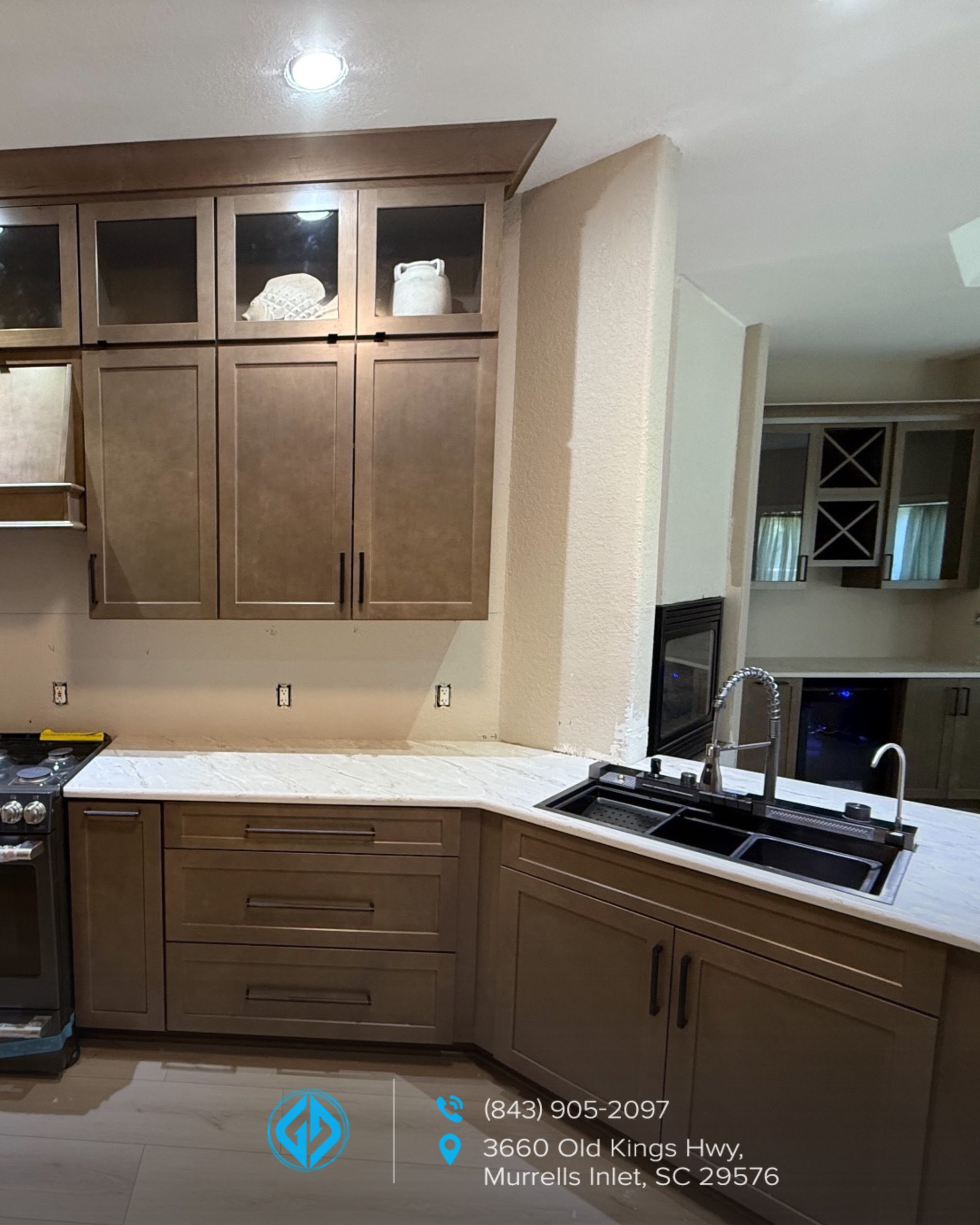
A safe countertop overhang for bar seating is usually about 10 to 12 inches for comfortable knee space, but the safe limit depends on the stone material, slab thickness, cabinet support, bracket placement, and how the seating area will be used. A shallow 6-inch overhang can work for quick standing use, while a deeper 12-inch overhang is usually better for actual stools.
At Granite Depot of Myrtle Beach, we never treat overhang as only a design choice. It is a comfort issue and a support issue. For homeowners comparing countertop fabricators in Red Hill, SC, the most important question is not just “How far can the stone hang over?” It is “How far can it overhang safely with the right support?”
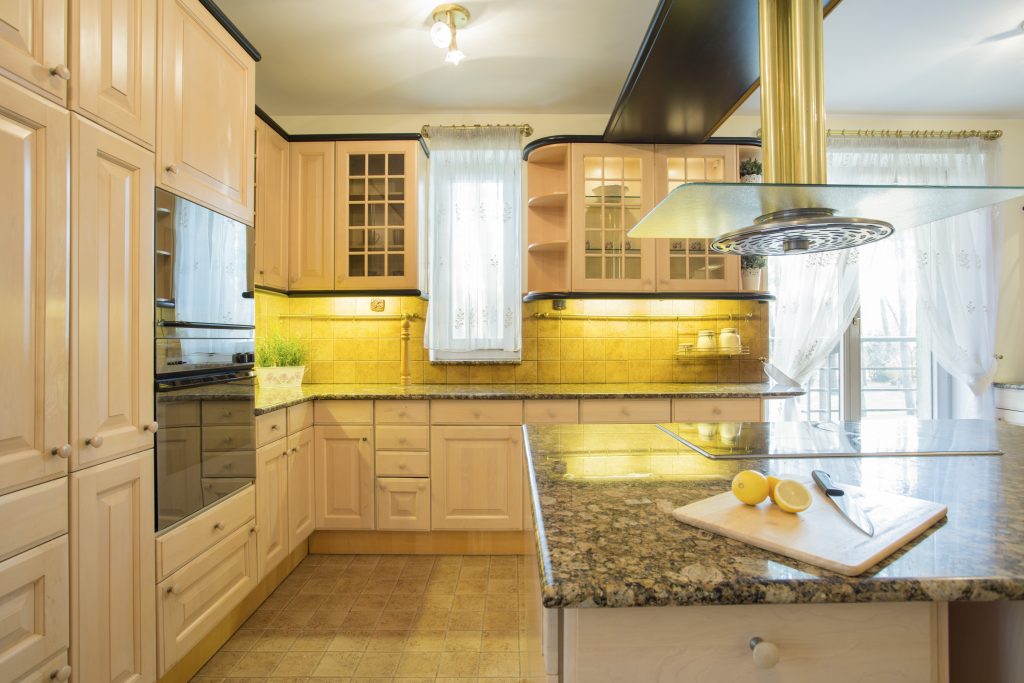
What is a standard countertop overhang for bar seating?
A standard countertop overhang for bar seating is usually 10 to 12 inches. That range gives most people enough knee room to sit without feeling pressed against the cabinet or island panel.
A 6-inch overhang may look fine, but it is usually not comfortable for real seating. It works better for a pass-through ledge, serving counter, or quick coffee spot. A 12-inch overhang feels more natural for stools, especially when the island is used for breakfast, homework, snacks, or casual dinners.
| Overhang Depth | Best Use | Comfort Level |
|---|---|---|
| 1–2 inches | Standard cabinet edge | No seating |
| 6 inches | Quick standing use | Limited |
| 8 inches | Short sitting periods | Fair |
| 10 inches | Casual seating | Good |
| 12 inches | Regular bar seating | Better |
| 15 inches | More leg room | Most comfortable, needs support |
Comfort and safety should be planned together.
Is a 12-inch overhang safe without support?
A 12-inch overhang may be safe in some situations, but it should not be assumed safe without checking the stone, thickness, layout, and cabinet structure. Stone is heavy, and unsupported overhang can crack or become unstable when people lean on it.
Support needs change depending on material. Granite, quartz, marble, and quartzite do not all behave the same way. A long island with a continuous overhang may need brackets, corbels, steel supports, or another support system even when the depth seems normal.
When homeowners ask countertop fabricators in Red Hill, SC about seating, we recommend discussing support before fabrication begins. Waiting until installation day can limit options.
How much overhang is comfortable for stools?
A 10 to 12-inch overhang is usually comfortable for most counter-height stools. A 15-inch overhang gives more leg room, but it usually requires stronger support planning.
The stool height also matters. Counter-height seating is different from bar-height seating. A counter-height island is typically more comfortable for daily kitchen use, while a bar-height ledge may feel more separated from the prep area.
| Seating Type | Typical Surface Height | Comfortable Overhang |
|---|---|---|
| Counter-height seating | About 36 inches | 10–12 inches |
| Bar-height seating | About 42 inches | 10–12 inches |
| Occasional stool use | Varies | 8–10 inches |
| Family dining island | About 36 inches | 12–15 inches |
| Standing serving ledge | Varies | 6–8 inches |
The more often people sit there, the more important knee space becomes.
How does countertop material affect overhang safety?
Countertop material affects overhang safety because each stone has different strength, flexibility, weight, and crack risk. Natural stone and engineered surfaces still need proper support when the overhang gets deeper.
Granite is strong and commonly used for islands and bar seating. Quartz is durable and low-maintenance, but it still needs support when overhangs are large. Marble can be more sensitive and should be planned carefully. Quartzite can be strong, but each slab should be reviewed because natural stone varies.
| Material | Heat Resistance | Stain Resistance | Maintenance Level | Overhang Planning Note |
|---|---|---|---|---|
| Granite | High | Good when sealed | Moderate | Strong, but support depends on depth |
| Quartz | Moderate | Very good | Low | Needs support for larger overhangs |
| Marble | Good but sensitive | Moderate | Higher | More caution with long unsupported areas |
| Quartzite | High | Good when sealed | Moderate | Strong, but slab review matters |
Granite Depot of Myrtle Beach checks material choice, edge profile, and seating layout together. A beautiful slab still needs the right support.
Does slab thickness change how far the countertop can overhang?
Slab thickness can affect overhang strength, but thickness alone does not make every overhang safe. Cabinet structure, stone type, span length, seams, edge profile, and support placement also matter.
A thicker-looking edge may be created with a mitered edge or built-up detail. That does not always mean the stone has more solid strength through the entire slab. Homeowners should ask whether the thickness is actual slab thickness or a visual edge detail.
Support should be based on the real structure, not only the look from the front.
Where should brackets or supports go?
Brackets or supports should be placed where they can carry the overhang without blocking knees, stools, or cabinet function. The goal is to protect the stone while keeping the seating area comfortable.
Brackets are often used under deeper overhangs. Corbels can work in traditional kitchens, but they may take up knee space. Hidden steel supports can create a cleaner look, especially on modern islands. The best choice depends on cabinet construction and the finished design.
Common support options include:
- Steel brackets
- Hidden metal plates
- Corbels
- Decorative wood supports
- Extended cabinet panels
- Knee walls
- Island legs
- Reinforced cabinet framing
The support should be planned before templating and fabrication.
Can overhang affect countertop seams?
Overhang can affect countertop seams because seams should not be placed where stress, unsupported weight, or heavy leaning could create problems. Seam placement matters more on islands and peninsulas with seating.
A seam near a seating overhang may need extra planning. The fabricator has to consider slab size, material direction, pattern flow, sink cutouts, cooktop openings, and support. Large islands often require careful slab layout so the strongest and cleanest result is possible.
For seating islands, we prefer to discuss seam placement early. It is easier to plan before the slab is cut.
What edge profile works best for bar seating?
A slightly rounded, eased, or softened edge usually works best for bar seating because people rest arms, hands, plates, and elbows along the edge. A sharp edge may look modern but feel less comfortable.
Edge profile also affects how thick and finished the countertop looks. A simple eased edge works with many granite and quartz designs. A half bullnose can feel softer. A mitered edge can look more custom, but it must be fabricated carefully.
| Edge Profile | Seating Comfort | Best Use |
|---|---|---|
| Eased edge | Good | Clean modern and transitional kitchens |
| Pencil edge | Good | Simple, slightly softened look |
| Half bullnose | Very good | Comfortable family seating |
| Beveled edge | Moderate | More defined style |
| Mitered edge | Good when done well | Thicker custom look |
The edge should feel good where people actually sit.
How much do countertops with bar seating cost?
Countertop pricing depends on material, square footage, slab selection, overhang depth, support needs, edge profile, sink cutouts, cooktop openings, seams, backsplash pieces, fabrication, delivery, and installation. Granite starts around $42 per square foot, quartz around $55, marble around $55, and quartzite around $75.
| Material | Starting Price | Seating Island Note |
|---|---|---|
| Granite | From about $42 per sq. ft. | Durable and common for bar overhangs |
| Quartz | From about $55 per sq. ft. | Low-maintenance, support still matters |
| Marble | From about $55 per sq. ft. | Beautiful but needs careful planning |
| Quartzite | From about $75 per sq. ft. | Premium natural stone option |
Granite Depot of Myrtle Beach reviews the full island or peninsula before final pricing. For countertop fabricators in Red Hill, SC, a useful estimate should include material, templating, fabrication, installation, edge profile, overhang depth, support details, sink cutouts, seam planning, and backsplash options.
How long does countertop fabrication and installation take?
Most countertop projects take about 7-10 days after final measurements. This includes templating, slab layout, fabrication, edge finishing, sink cutouts, cooktop openings, support coordination, scheduling, delivery, and installation.
Cabinets must be installed, level, and secure before templating. Overhang depth, stool space, bracket placement, edge profile, seams, and appliance openings should be confirmed before cutting starts. Once the stone is fabricated, major overhang changes are difficult.
At Granite Depot of Myrtle Beach, we explain the 7-10 day process early so homeowners can plan around cooking access, plumbing, and installation day. For countertop fabricators in Red Hill, SC, the timeline helps us handle seating comfort and support details without rushing the fabrication plan.
What mistakes should homeowners avoid with bar overhangs?
The biggest mistake is choosing the overhang only by how it looks in a photo. A beautiful island can still be uncomfortable if the overhang is too shallow or unsafe if it is unsupported.
Another mistake is forgetting stool clearance. People need space to sit, move, and push stools in. Cabinet doors, island panels, walkways, and nearby appliances should all be considered before deciding the final depth.
Before approving an overhang, review:
- Stool height
- Overhang depth
- Slab material
- Slab thickness
- Support brackets
- Cabinet strength
- Seam placement
- Edge profile
- Island size
- Walkway clearance
- Sink or cooktop location
- Daily seating use
A safe overhang should feel comfortable and stable.
FAQ: Countertop overhang for bar seating
How much countertop overhang do I need for stools?
Most stool seating needs about 10 to 12 inches of overhang for comfortable knee space.
Is 6 inches enough overhang for seating?
Six inches is usually too shallow for comfortable seating. It works better for quick standing use or a serving ledge.
Is 12 inches of countertop overhang safe?
It can be safe with the right material, thickness, cabinet structure, and support plan. It should be reviewed before fabrication.
Does granite need support for an overhang?
Granite may need support depending on overhang depth, span length, slab thickness, seams, and layout.
What support is best for a deep overhang?
Hidden steel supports, brackets, corbels, legs, or reinforced panels can all work depending on the design.
How much do countertop materials start at?
Granite starts around $42 per square foot, quartz around $55, marble around $55, and quartzite around $75.
How long does countertop installation take?
Most projects take about 7-10 days after final measurements, depending on templating, fabrication, cutouts, support coordination, delivery, and installation.
What should I ask countertop fabricators in Red Hill, SC?
Ask about safe overhang depth, support brackets, slab thickness, seams, edge profiles, material strength, templating, fabrication, installation, and stool clearance.
Where can homeowners near Red Hill, SC get help planning safe countertop overhangs?
Granite Depot of Myrtle Beach is located in Myrtle Beach, SC and serves nearby communities, including Red Hill, SC. We help homeowners plan kitchen islands, compare granite, quartz, marble, and quartzite, work with countertop fabricators in Red Hill, SC, coordinate fabrication, schedule installation, and choose safe overhangs, supports, edges, seams, and backsplash details. Our team can help make bar seating comfortable, stable, and properly planned before the stone is cut.