

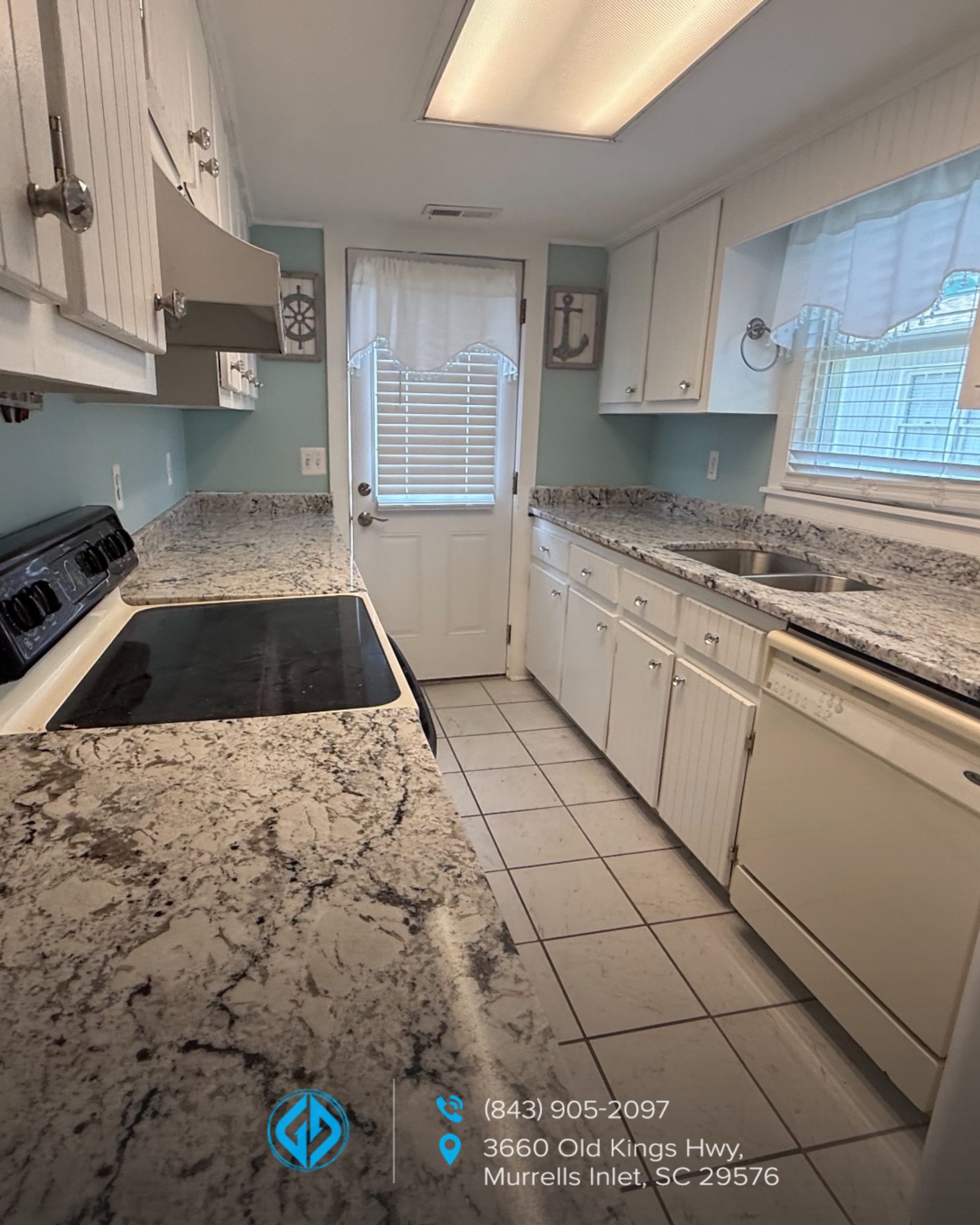
Most kitchen countertops should be about 3 cm thick, which is roughly 1 1/4 inches. This thickness is strong, practical, and common for granite, quartz, marble, and quartzite kitchen surfaces because it gives the countertop a solid look without needing as much built-up edge work as thinner slabs.
At Granite Depot of Myrtle Beach, we usually explain countertop thickness as both a design choice and a structural decision. Thickness affects how the edge looks, how the countertop is supported, how overhangs are planned, and how the finished kitchen feels. For homeowners choosing granite kitchen countertops in Socastee, SC, 3 cm is usually the most practical choice for everyday kitchens.

What is the standard thickness for kitchen countertops?
The standard kitchen countertop thickness is usually 3 cm, or about 1 1/4 inches. This is the most common choice for modern kitchens because it works well for islands, perimeter counters, sinks, cooktops, and standard cabinet layouts.
A 2 cm slab, which is about 3/4 inch, can still be used in some projects, but it often needs additional support, laminated edges, or build-up work to look and perform correctly. That can change the cost and the finished appearance. A thicker-looking edge can also be created without using a thicker full slab.
| Thickness | Approximate Size | Common Use | Main Note |
|---|---|---|---|
| 2 cm | About 3/4 inch | Bathrooms, walls, some kitchens | May need support or build-up |
| 3 cm | About 1 1/4 inches | Most kitchens | Strong and clean-looking |
| Built-up edge | Custom visual thickness | Islands and statement areas | Looks thicker than the slab |
| Mitered edge | Custom edge design | Waterfall islands, modern kitchens | Requires precise fabrication |
For most kitchens, 3 cm gives the best mix of strength, appearance, and value.
Is thicker always better for countertops?
Thicker is not always better because countertop performance depends on material, support, fabrication, cabinets, and installation. A well-supported 3 cm countertop can perform better than a thicker-looking surface with poor support.
A thicker edge can make a kitchen look more expensive, but the visual effect should match the cabinet style, room size, and countertop material. In a small kitchen, an overly thick edge can look heavy. In a large kitchen with a big island, a thicker-looking edge can feel more balanced.
The countertop should look proportional. A slim Shaker cabinet, a detailed cabinet door, or a floating vanity-style kitchen island may not need the same edge thickness as a bold modern kitchen.
Does granite need to be thicker than quartz?
Granite does not always need to be thicker than quartz, but both materials are commonly used in 3 cm thickness for kitchens. Granite is natural stone, while quartz is engineered, so they have different properties.
Granite has strong heat resistance and natural variation. Quartz is consistent, stain-resistant, and low-maintenance, but it needs more protection from direct heat. Marble and quartzite also have their own performance differences, so thickness should be discussed together with material use.
| Material | Common Kitchen Thickness | Heat Resistance | Stain Resistance | Maintenance |
|---|---|---|---|---|
| Granite | 3 cm | High | Good when sealed | Moderate |
| Quartz | 3 cm | Moderate | Very good | Low |
| Marble | 2 cm or 3 cm | Good but sensitive | Moderate | Higher |
| Quartzite | 3 cm | High | Good when sealed | Moderate |
Granite Depot of Myrtle Beach helps homeowners compare thickness and material together because the right answer is not based on size alone.
Is 2 cm countertop thickness a bad idea?
A 2 cm countertop is not automatically a bad idea, but it needs the right project conditions. It is more common in bathrooms, vertical applications, backsplashes, and certain design situations than in busy kitchen work zones.
In a kitchen, 2 cm material may need plywood support or a built-up edge, depending on the material and design. That can make the edge look thicker, but it also adds labor. If the goal is a simple, durable kitchen surface, 3 cm is often easier.
For granite kitchen countertops in Socastee, SC, we usually recommend asking how the slab will be supported, how the edge will be finished, and how sink or cooktop cutouts will be reinforced before choosing a thinner slab.
How does countertop thickness affect the edge profile?
Countertop thickness affects how the edge profile looks and how much detail can be created. A 3 cm slab gives enough depth for popular edges without needing extra build-up in most kitchens.
Simple eased edges, beveled edges, and small roundover edges work well with 3 cm stone. More decorative edges can also be possible, but the style should match the cabinets and backsplash. A very detailed edge can make a modern kitchen feel too traditional.
| Edge Profile | Best With | Visual Effect |
|---|---|---|
| Eased edge | 3 cm granite, quartz, quartzite | Clean and simple |
| Beveled edge | 3 cm stone | Slightly sharper detail |
| Half bullnose | 3 cm stone | Softer, rounded look |
| Ogee edge | Larger kitchens | More traditional |
| Mitered edge | Built-up designs | Thick modern appearance |
The edge is the part homeowners touch every day, so it should be comfortable as well as attractive.
Does thickness matter around sinks and cooktops?
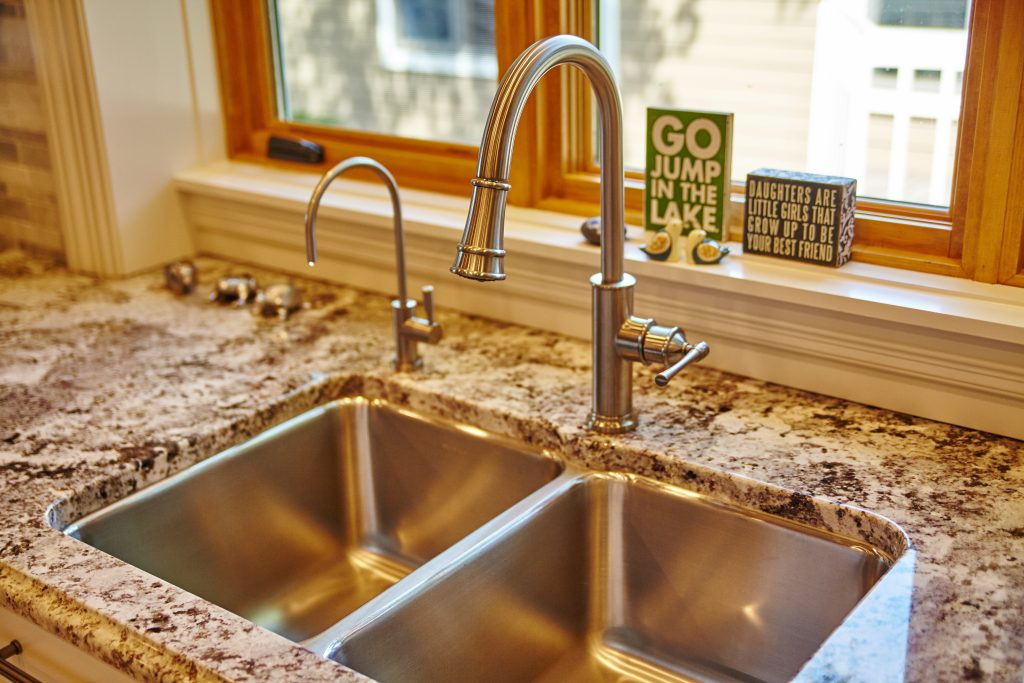
Thickness matters around sinks and cooktops because cutouts remove part of the slab. The remaining stone needs proper fabrication and support.
A sink opening creates narrow sections of countertop, especially in front of and behind the sink. Cooktop cutouts also need accurate measurements and clean fabrication. A 3 cm slab often gives strong performance in these areas when installed correctly.
That said, thickness alone does not prevent problems. Cabinets must be level, sink bases must be secure, and seams must be planned carefully. For granite kitchen countertops in Socastee, SC, sink and cooktop areas should be reviewed before the slab is cut.
How does thickness affect countertop overhangs?
Thickness affects overhang planning because larger overhangs may need extra support, especially on islands and seating areas. A 3 cm stone can handle many standard overhangs, but long or deep overhangs still need careful support.
Homeowners often want island seating, but legs, brackets, corbels, or steel support may be needed depending on the design. The countertop material, thickness, overhang depth, and cabinet layout all matter. Stone should not be expected to float without support.
A safe overhang plan helps prevent cracks, shifting, and stress over time. It also makes the island feel more stable during everyday use.
What thickness looks best on a kitchen island?
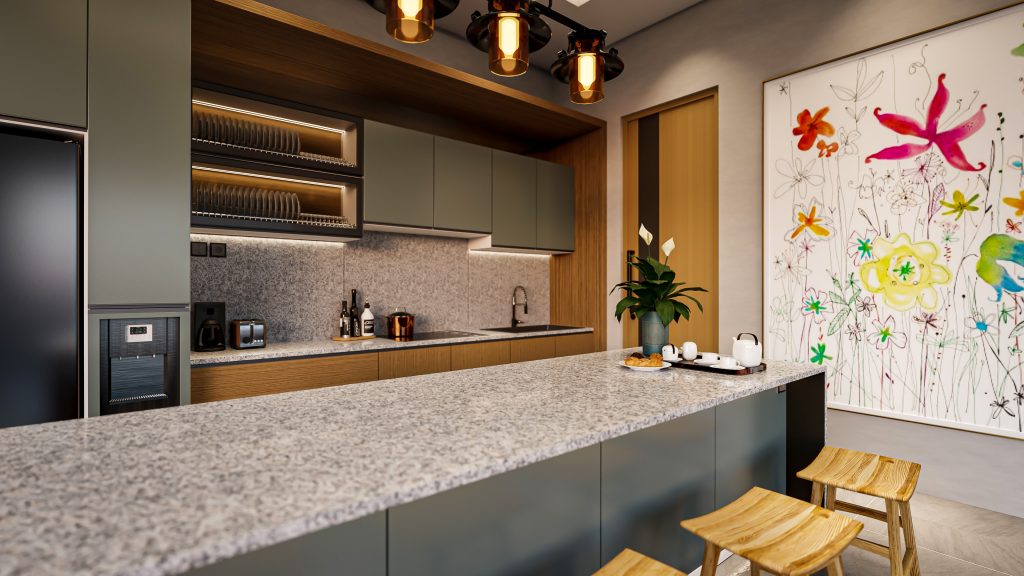
A 3 cm countertop usually looks best on most kitchen islands because it feels substantial without looking too bulky. A mitered edge can create a thicker statement look when the design calls for it.
Large islands often need visual weight. A thin edge can look unfinished on a big island, especially with bold quartzite, granite, or waterfall panels. Smaller islands usually look better with a clean 3 cm edge rather than an oversized built-up edge.
The island is often the most visible surface in the kitchen. It should match the cabinet scale, lighting, flooring, and backsplash.
How much do different countertop materials cost?
Countertop pricing depends on material, square footage, slab selection, thickness, edge profile, sink cutouts, cooktop openings, seam layout, backsplash pieces, fabrication, and installation. Granite starts around $42 per square foot, quartz around $55, marble around $55, and quartzite around $75.
| Material | Starting Price | Thickness Note |
|---|---|---|
| Granite | From about $42 per sq. ft. | 3 cm is common for kitchens |
| Quartz | From about $55 per sq. ft. | 3 cm is common and practical |
| Marble | From about $55 per sq. ft. | Needs careful use and support |
| Quartzite | From about $75 per sq. ft. | Often used for statement kitchens |
Granite Depot of Myrtle Beach reviews these details before fabrication so homeowners understand what affects the full project. For granite kitchen countertops in Socastee, SC, a useful estimate should include material, thickness, templating, fabrication, installation, edge work, cutouts, seams, and backsplash options.
How long does countertop installation take?
Most countertop projects take about 7-10 days after final measurements. This includes templating, slab layout, fabrication, edge finishing, sink cutouts, scheduling, and installation.
Cabinets must be installed, level, and secure before templating. Sink type, faucet holes, cooktop openings, overhangs, seam placement, and backsplash height should be confirmed before fabrication begins. For granite kitchen countertops in Socastee, SC, this 7-10 day timeline helps homeowners plan around kitchen access, plumbing, backsplash work, and installation day.
At Granite Depot of Myrtle Beach, we explain the process early because thickness decisions affect fabrication. Edge style, support, seam placement, and island design all need to be settled before the stone is cut.
What mistakes should homeowners avoid when choosing thickness?
The biggest mistake is choosing countertop thickness only by appearance. A thick edge may look beautiful, but it still needs proper cabinet support, clean fabrication, and the right material choice.
Another mistake is forgetting about appliances and fixtures. Sink clips, faucet holes, cooktops, dishwashers, backsplashes, and cabinet heights can all affect the finished result. Thickness is one part of the whole kitchen system.
Before deciding, review:
- Countertop material
- Cabinet strength and levelness
- Island size and overhang
- Sink and cooktop cutouts
- Edge profile
- Backsplash height
- Seam placement
- Appliance clearances
- Finished countertop height
- Daily cooking habits
A countertop should look right, feel right, and perform correctly after installation.
FAQ: Kitchen countertop thickness
What is the best thickness for kitchen countertops?
A 3 cm countertop, about 1 1/4 inches, is usually the best thickness for most kitchens.
Is 2 cm too thin for a kitchen countertop?
Not always, but 2 cm often needs extra support or a built-up edge in kitchen applications.
Is 3 cm granite strong enough?
Yes. 3 cm granite is commonly used for kitchens and performs well when properly fabricated, supported, and installed.
Does quartz need the same thickness as granite?
Quartz is commonly used in 3 cm thickness for kitchens, similar to granite, but it has different heat and maintenance needs.
Does countertop thickness affect price?
Yes. Thickness, edge profile, slab choice, cutouts, seams, fabrication, and installation can all affect the final cost.
How much do kitchen countertops start at?
Granite starts around $42 per square foot, quartz around $55, marble around $55, and quartzite around $75.
How long does countertop installation take?
Most projects take about 7-10 days after final measurements, depending on material, fabrication, cutouts, seams, and scheduling.
Where can homeowners near Socastee, SC get help choosing countertop thickness?
Granite Depot of Myrtle Beach is located in Myrtle Beach, SC and serves nearby communities, including Socastee, SC. We help homeowners compare granite, quartz, marble, and quartzite, plan granite kitchen countertops in Socastee, SC, handle fabrication, schedule installation, and coordinate backsplash details. Our team can help choose the right thickness, edge profile, and support plan for a kitchen that looks finished and works every day.