


The main difference between polished and honed countertops is their surface finish. Polished countertops have a glossy, reflective appearance, while honed countertops have a smooth matte or satin finish with significantly less shine.
Both finishes can work well in residential kitchens and bathrooms, but they differ in how they display fingerprints, water spots, scratches, and everyday residue.
At Granite Depot of Myrtle Beach, we help homeowners compare finishes before choosing their stone. When selecting countertops in Bucksport, SC, we recommend considering maintenance requirements, lighting, and how the surface will be used rather than focusing on appearance alone.

How Are Polished and Honed Countertops Made?
Polished and honed finishes are created through different stages of surface grinding and refinement.
During polishing, stone is processed with progressively finer abrasives until it develops a reflective surface. Honing uses abrasive finishing techniques but stops before the stone reaches a high gloss.
The result is a difference in light reflection rather than an entirely different material.
A polished granite slab and a honed granite slab may come from the same stone variety, yet look noticeably different when installed.
| Feature | Polished countertop | Honed countertop |
|---|---|---|
| Appearance | Glossy and reflective | Matte or satin |
| Light reflection | High | Low |
| Color presentation | Often deeper and more saturated | Often softer and more muted |
| Fingerprints | May show in reflections | Oily marks may stand out |
| Surface texture | Smooth | Smooth to subtly textured |
| Common applications | Kitchens and bathrooms | Kitchens, bathrooms, islands |
We recommend viewing both finishes under natural and artificial lighting before making a decision.
Does a Polished Finish Make Stone Look More Colorful?
Yes, polishing often makes natural stone colors appear deeper and more pronounced.
The reflective surface can emphasize mineral variation, veining, and contrast.
For example, black granite may appear darker and more reflective when polished, while a honed version can look softer and slightly gray.
White marble may also display different levels of contrast depending on its finish.
When homeowners compare countertops in Bucksport, SC, we recommend examining actual stone samples rather than relying entirely on photographs.
Lighting, camera exposure, and surrounding cabinet colors can influence how a finish appears.
Which Finish Hides Fingerprints and Water Spots Better?
Neither finish consistently hides fingerprints and water spots better in every situation.
Polished countertops may reveal fingerprints because reflected light makes surface residue more visible. However, their smooth finish often allows marks to be removed easily.
Honed countertops reduce reflections but may display oily fingerprints as darker patches, especially on dark stone.
Some matte quartz finishes also require additional cleaning to remove metal marks or surface residue.
We recommend testing samples with water and fingerprints before choosing a finish.
A surface that looks clean under showroom lighting may behave differently beside a sunny kitchen window.
Are Honed Countertops More Difficult to Clean?
Honed countertops can require more attention than polished surfaces, depending on the material and surface texture.
Polished stone generally has a smoother, more reflective finish that is convenient for routine wiping.
Honed natural stone may have a more open surface texture, making certain oils and residue more noticeable.
However, cleaning requirements vary by stone variety and manufacturer.
At Granite Depot of Myrtle Beach, we recommend using cleaners specifically approved for the selected countertop material.
For both finishes, homeowners should avoid abrasive cleaning pads unless the manufacturer explicitly allows them.
Do Polished and Honed Countertops Have Different Stain Resistance?
Yes, finish can influence stain resistance, particularly with natural stone, although the stone’s composition and sealing treatment remain important.
Some honed natural stones may absorb liquids more readily than polished versions of the same material.
However, this does not mean every honed countertop stains easily.
Granite, marble, and quartzite vary considerably in porosity.
Engineered quartz is generally nonporous and does not require sealing, regardless of whether its surface is polished or matte.
| Material | Polished finish | Honed finish | Stain considerations |
|---|---|---|---|
| Granite | Common and easy to maintain | Natural matte appearance | Sealing depends on stone |
| Quartz | Smooth and reflective | Matte options vary by manufacturer | Generally nonporous |
| Marble | Glossy with visible veining | Soft, understated appearance | Susceptible to staining |
| Quartzite | Highlights natural patterns | Less reflective appearance | Some varieties require sealing |
For homeowners choosing countertops in Bucksport, SC, we recommend checking the specific slab’s maintenance requirements before selecting a finish.
Which Finish Is Better for Granite Countertops?
Both polished and honed finishes can work well for granite countertops.
Polished granite is popular because it emphasizes natural mineral patterns and is generally convenient to clean.
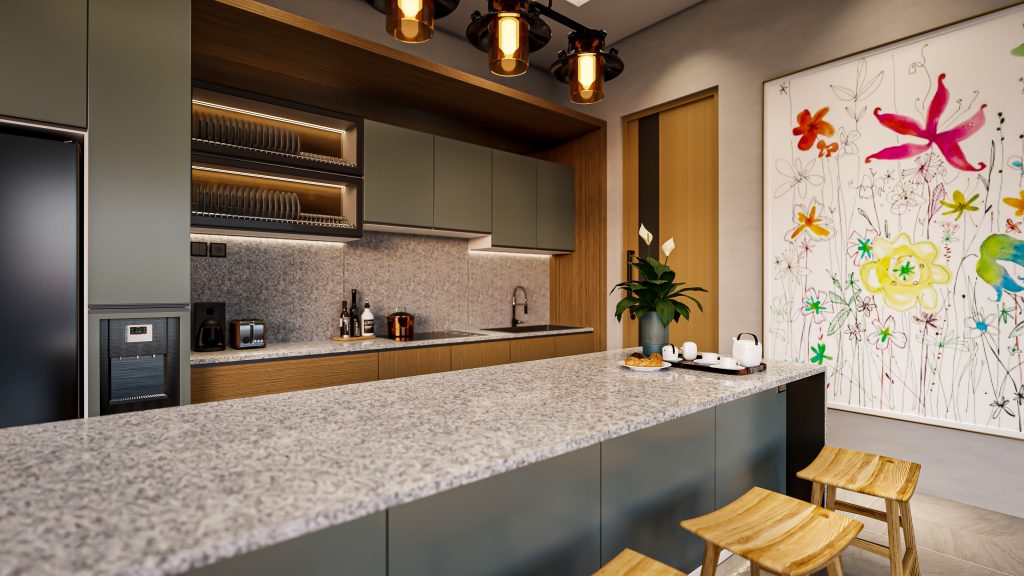
Honed granite creates a softer appearance that coordinates with modern, transitional, and rustic kitchen designs.
However, certain dark honed granites may show oily fingerprints more clearly.
We recommend considering the stone’s color and natural pattern.
A highly patterned granite may disguise minor surface marks more effectively than a uniform black stone, regardless of finish.
Is Honed Marble Better Than Polished Marble?
Honed marble can be more forgiving visually when it comes to minor etching, but it is not inherently more resistant to damage.
Marble contains calcium carbonate, which reacts with acidic substances such as lemon juice and vinegar.
On polished marble, etching often appears as a dull area that interrupts the reflective surface.
On honed marble, similar damage may be less obvious because the surrounding finish is already matte.
However, both finishes require careful cleaning and appropriate sealing.
We recommend choosing honed marble for its appearance rather than assuming it eliminates maintenance concerns.
Does Countertop Finish Affect Heat and Scratch Resistance?
The finish does not fundamentally change the heat resistance of the underlying material.
Granite and quartzite generally tolerate everyday heat well, although sudden temperature changes can still cause damage.
Engineered quartz contains resin and can be damaged by excessive heat.
Marble is naturally heat-resistant but remains susceptible to scratching and acid etching.
| Material | Heat resistance | Scratch resistance | Main concern |
|---|---|---|---|
| Granite | Generally good | Generally high | Thermal shock and staining |
| Quartz | Moderate; resin is heat-sensitive | Generally good | Heat damage and surface marks |
| Marble | Naturally heat-resistant | Lower than granite | Scratches and acid etching |
| Quartzite | Generally good | Often high | Varies by stone variety |
We recommend using trivets and cutting boards with every countertop material.
A polished finish may make certain scratches more noticeable because they interrupt reflected light, while honed surfaces can sometimes disguise fine marks.
How Much Do Polished and Honed Countertops Cost?
Our starting material prices are $42 per square foot for granite, $55 for quartz, $55 for marble, and $75 for quartzite.
These are starting material prices rather than complete installed project costs.
The finish may affect pricing depending on slab availability and whether additional surface processing is required.
| Material | Starting material price | Example for 40 sq ft |
|---|---|---|
| Granite | $42/sq ft | $1,680 |
| Quartz | $55/sq ft | $2,200 |
| Marble | $55/sq ft | $2,200 |
| Quartzite | $75/sq ft | $3,000 |
These examples show basic material calculations before fabrication, delivery, installation, and other project expenses.
At Granite Depot of Myrtle Beach, we recommend requesting quotes for the exact stone and finish being considered.
When comparing countertops in Bucksport, SC, homeowners should also account for edge profiles, sink cutouts, backsplash requirements, and installation complexity.
A honed finish may cost more when it requires additional fabrication work or special ordering.
Which Finish Works Best With Different Kitchen Designs?
Polished countertops often work well in kitchens that benefit from reflected light and a more pronounced stone pattern.
Honed countertops are frequently chosen for understated interiors with natural wood, matte cabinets, and subtle color palettes.
However, either finish can complement modern or traditional cabinetry.
For example, polished white quartz can create a bright appearance alongside dark cabinets.
Honed marble may provide a softer contrast with warm wood cabinetry.
We recommend evaluating countertop samples beside cabinet doors, flooring, and backsplash materials.
The same stone can look noticeably different depending on the surrounding finishes.
How Long Does Countertop Fabrication and Installation Take?
A countertop project generally takes approximately 7-10 days, depending on finalized measurements, material availability, fabrication requirements, and installation scheduling.
Specialty finishes may require additional time if the selected slab is not available in the desired surface treatment.
At Granite Depot of Myrtle Beach, our process includes:
- Material selection: Compare granite, quartz, marble, and quartzite.
- Finish selection: Review polished and honed samples.
- Measurements: Confirm countertop dimensions and appliance openings.
- Fabrication: Cut the stone and prepare edges and sink openings.
- Surface inspection: Check finish consistency and visible details.
- Installation: Position, level, secure, and finish the countertop sections.
We recommend confirming the finish before fabrication begins.
Changing the surface treatment afterward may require additional work or a different slab.
Can You Change a Polished Countertop to a Honed Finish?
Yes, many natural stone countertops can be professionally refinished from polished to honed.
The process involves using specialized abrasives to remove the glossy surface and create a more matte appearance.
However, not every material is suitable for refinishing after installation.
Engineered quartz requires particular caution because manufacturers may prohibit surface alterations.
We recommend having a qualified stone professional evaluate the material before attempting refinishing.
Frequently Asked Questions About Polished and Honed Countertops
1. Is a Honed Countertop More Expensive Than a Polished Countertop?
Sometimes. Pricing depends on the stone, finish availability, and additional fabrication requirements.
2. Do Honed Countertops Need Sealing?
Some honed natural stones require sealing. Engineered quartz generally does not.
3. Are Polished Countertops Easier to Clean?
Often, yes. Their smooth surfaces can make routine wiping easier, although maintenance depends on the material.
4. Does Honed Granite Scratch More Easily?
Honing does not significantly change granite’s underlying hardness, but it can affect how visible surface marks appear.
5. Is Honed Marble Better for Busy Kitchens?
It may disguise minor etching better visually, but marble still requires careful maintenance in busy kitchens.
6. Can You Use Honed Quartz in a Kitchen?
Yes. Many manufacturers offer matte quartz surfaces, although some require additional cleaning compared with polished versions.
7. Which Finish Is Better for Dark Countertops?
It depends on maintenance preferences. Polished dark stone reflects more light, while honed dark stone may show oily fingerprints more clearly.

Where Can You Compare Polished and Honed Countertops Near Bucksport, SC?
Granite Depot of Myrtle Beach is based in the Myrtle Beach, SC area and serves homeowners in Bucksport, SC, and surrounding communities.
We help customers select granite, quartz, marble, and quartzite while coordinating countertop measurements, fabrication, edge finishing, sink cutouts, and installation.
If you are exploring countertops in Bucksport, SC, we can help you compare polished and honed finishes and choose a surface that suits your kitchen design, maintenance preferences, and budget.