

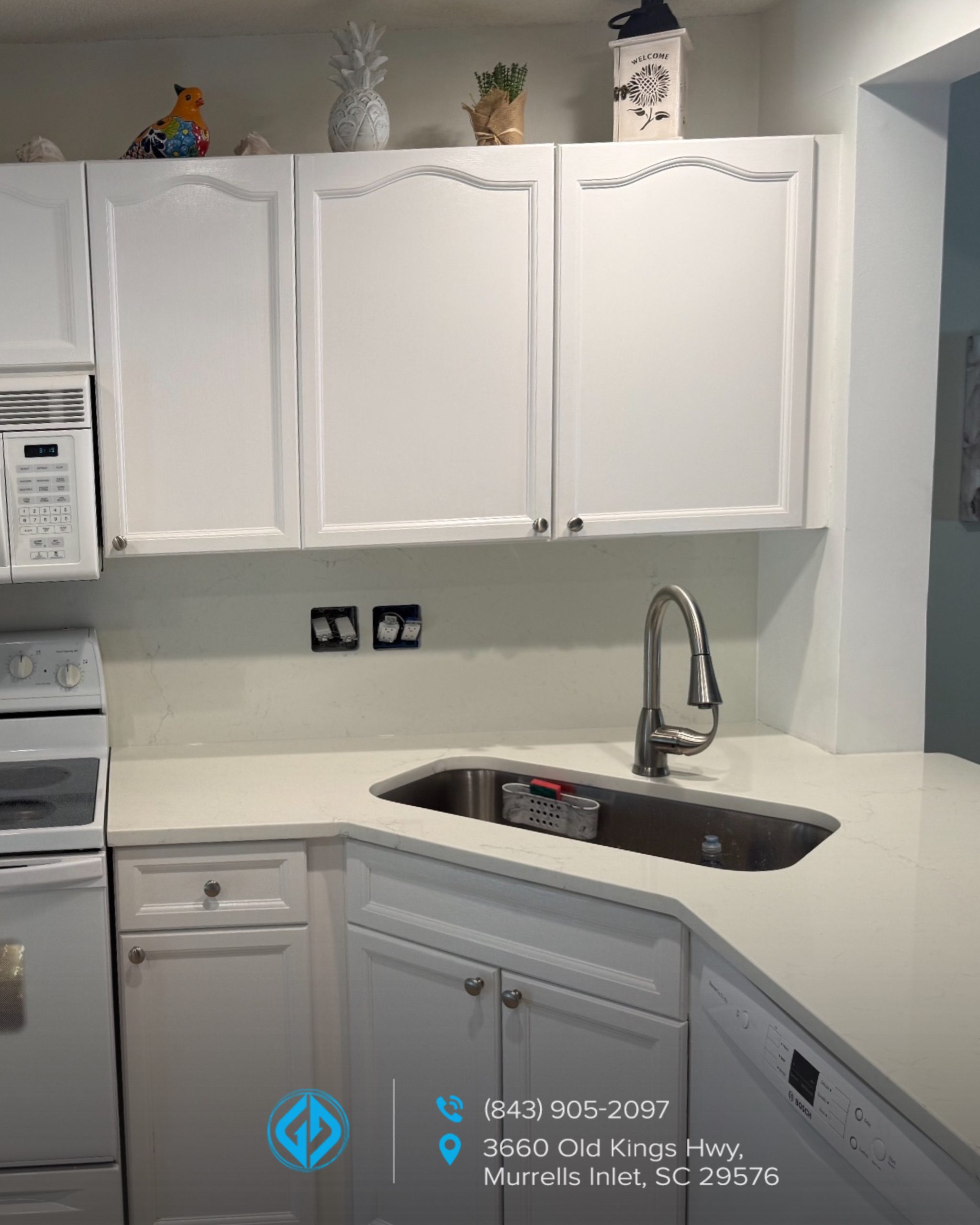
Countertop prices vary because the final cost is not based on material alone. The total depends on slab type, square footage, color rarity, edge profile, sink cutouts, cooktop openings, seams, backsplash pieces, fabrication, installation, and how complex the kitchen layout is.
At Granite Depot of Myrtle Beach, we explain pricing this way because two kitchens can use the same material and still have different final numbers. One may need a simple straight run. Another may need a large island, multiple seams, an undermount sink, a cooktop cutout, and a full-height backsplash. For homeowners comparing quartz kitchen countertops in Socastee, SC, understanding what affects price makes the estimate much easier to read.
What is included in countertop pricing?
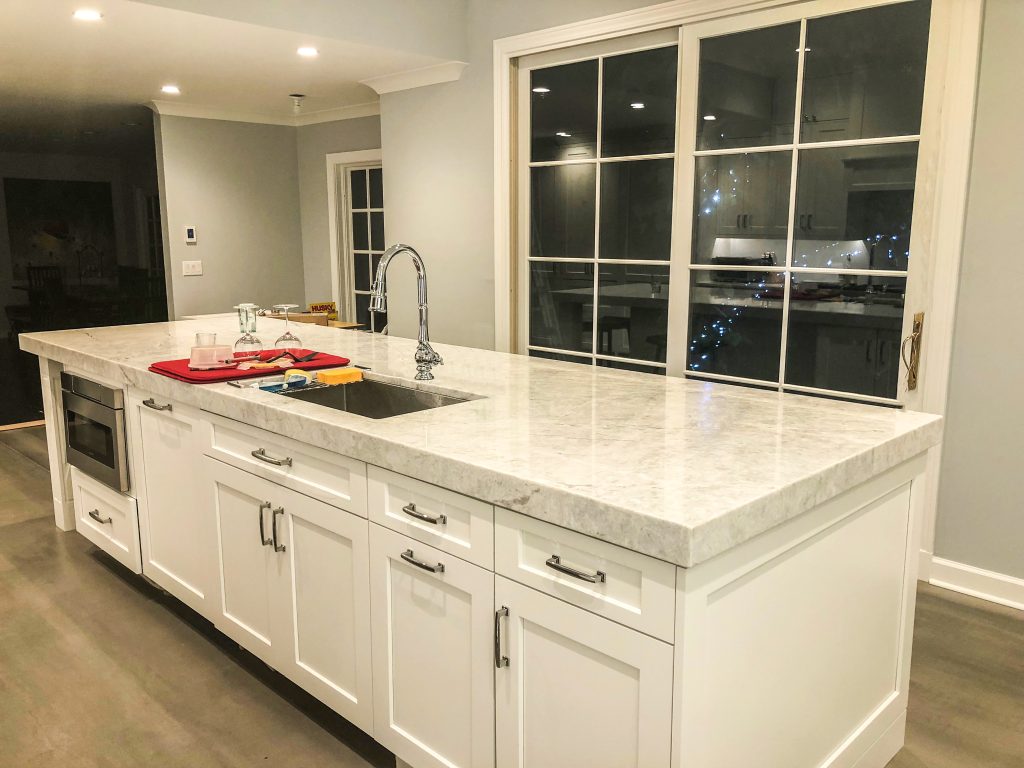
Countertop pricing usually includes the material, measuring, templating, fabrication, edge work, cutouts, delivery, and installation. Some projects also include backsplash pieces, seam planning, removal, plumbing coordination, or additional support details.
The slab price is only one part of the project. A countertop must be measured, cut, polished, transported, installed, and fitted around cabinets, sinks, faucets, appliances, and walls. That labor is what turns a slab into a finished kitchen surface.
| Price Factor | Why It Affects Cost |
|---|---|
| Material type | Granite, quartz, marble, and quartzite have different starting prices |
| Square footage | Larger kitchens need more material |
| Edge profile | Detailed edges require more fabrication |
| Sink cutout | Undermount sinks need precise polishing |
| Seams | More seams require more planning and labor |
| Backsplash | Extra pieces increase material and installation |
| Layout complexity | Islands, corners, and cooktops add work |
A lower starting price can still become higher if the layout has more details.
Why do different countertop materials cost different amounts?
Different materials cost different amounts because they come from different sources, require different production methods, and have different fabrication needs. Granite, quartz, marble, and quartzite do not price the same because they do not perform or install the same way.
Granite starts around $42 per square foot and is often a strong value for natural stone. Quartz starts around $55 per square foot and offers low maintenance with consistent colors. Marble also starts around $55 per square foot, but it needs more careful use. Quartzite starts around $75 per square foot because many slabs are harder, rarer, and more demanding to fabricate.
| Material | Starting Price | Main Pricing Reason |
|---|---|---|
| Granite | From about $42 per sq. ft. | Natural stone with many available colors |
| Quartz | From about $55 per sq. ft. | Engineered surface with consistent designs |
| Marble | From about $55 per sq. ft. | Natural stone with classic veining |
| Quartzite | From about $75 per sq. ft. | Dense natural stone, often premium slabs |
Granite Depot of Myrtle Beach helps homeowners compare the material cost with the daily maintenance needs, not just the first number on the estimate.
Why can quartz prices vary so much?
Quartz prices vary because color, brand, pattern, thickness, finish, and availability can all change the cost. A simple quartz color may cost less than a dramatic marble-look quartz with heavy veining.
Some quartz designs are made to look like marble, concrete, limestone, or natural stone. More detailed designs can cost more because they are more in demand or harder to produce. Large islands can also affect price because slab size, seam placement, and pattern matching become more important.
For quartz kitchen countertops in Socastee, SC, we recommend looking at more than one slab or sample in the same color family. A homeowner may find a similar look at a better price if they stay flexible on veining, background tone, or brand.
Does square footage explain most of the price difference?
Square footage explains part of the price difference, but not all of it. A larger kitchen usually costs more, but a small kitchen with many cutouts, corners, seams, and specialty details can also be expensive.
A simple 45-square-foot kitchen can be easier to fabricate than a 35-square-foot kitchen with an angled island, farmhouse sink, cooktop opening, and full-height backsplash. Shape matters. Details matter.
| Layout Type | Price Impact | Why |
|---|---|---|
| Straight countertop run | Lower | Simple measuring and cutting |
| L-shaped kitchen | Moderate | Corner and seam planning |
| U-shaped kitchen | Higher | More cuts and more fitting |
| Large island | Moderate to high | Slab size and overhang support |
| Waterfall island | High | Mitered edges and pattern matching |
The cleanest estimate is based on the full layout, not a rough square-foot guess.
Why do edge profiles affect countertop cost?
Edge profiles affect cost because some edges require more time, skill, and polishing. A simple eased edge is usually more affordable than a decorative ogee or mitered edge.
The edge also changes the style of the kitchen. A clean eased edge works well in modern and transitional kitchens. A more decorative edge can fit a traditional kitchen, but it may add cost and cleaning detail.
At Granite Depot of Myrtle Beach, we usually recommend choosing an edge that matches the cabinets and the way the kitchen is used. A beautiful edge should not create unnecessary cost if the homeowner wants a practical, easy-to-clean surface.
Why do sink cutouts and faucet holes add to the price?
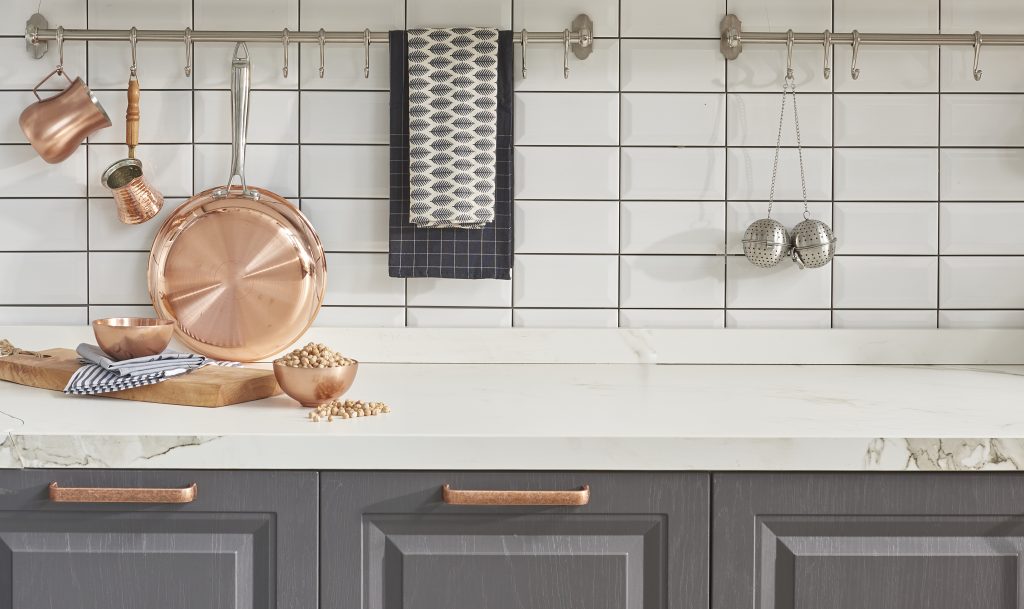
Sink cutouts and faucet holes add to the price because they require precise fabrication. An undermount sink needs a finished, polished edge because the stone opening remains visible.
Faucet holes, soap dispenser holes, filtered water holes, and accessory holes also require accurate drilling. If the homeowner changes the sink or faucet after fabrication starts, the project can be delayed or adjusted at extra cost.
For quartz kitchen countertops in Socastee, SC, we always recommend finalizing sink and faucet choices before templating. It is much easier to plan the cutouts correctly than to correct a mismatch later.
Why do seams change countertop pricing?
Seams change pricing because they affect slab layout, material use, labor, and the finished appearance. Some kitchens need seams because slab sizes are limited or because the layout is too large for one piece.
Good seam planning is both technical and visual. A seam should be placed where the stone can be supported properly and where the pattern will look as natural as possible. With quartz and marble-look materials, vein matching can also affect labor.
A cheaper estimate may not always include the same level of seam planning. That is why homeowners should ask where seams will be and how they will be handled.
How do countertops compare for durability and maintenance?
Countertop prices also vary because each material offers a different balance of durability, heat resistance, stain resistance, and maintenance. A material that costs more upfront may save effort later, while a lower-cost natural stone may need sealing or more careful care.
| Material | Heat Resistance | Stain Resistance | Maintenance Level |
|---|---|---|---|
| Granite | High | Good when sealed | Moderate |
| Quartz | Moderate | Very good | Low |
| Marble | Good but sensitive | Moderate | Higher |
| Quartzite | High | Good when sealed | Moderate |
Quartz often costs more than some granite options, but it does not need sealing. Marble may start near quartz in price, but it requires more careful daily habits. Quartzite can cost more because it offers natural stone beauty with strong heat resistance, but it still needs proper sealing and expert fabrication.
Why does backsplash planning affect the total cost?
Backsplash planning affects the total cost because backsplash material, height, tile work, slab pieces, outlets, and wall conditions all add detail. A short 4-inch backsplash costs less than a full-height slab backsplash.
A tile backsplash can also vary widely depending on tile size, pattern, grout, trim, and labor. A simple subway tile backsplash is usually more affordable than a detailed mosaic or large-format slab look. If the countertop has strong movement, a calmer backsplash can save money and make the kitchen look cleaner.
Backsplashes are not just decorative. They protect the wall behind the sink, range, and prep areas from water, grease, and food splashes.
How much should homeowners expect to spend?
Homeowners should expect countertop pricing to start with the material cost, then change based on layout and project details. Granite starts around $42 per square foot, quartz around $55, marble around $55, and quartzite around $75.
| Cost Category | What It May Include |
|---|---|
| Material | Slab selection, color, thickness, finish |
| Fabrication | Cutting, polishing, edge work, cutouts |
| Installation | Delivery, setting stone, leveling, seams |
| Backsplash | 4-inch pieces, tile, or full-height material |
| Extras | Removal, special support, additional holes |
Granite Depot of Myrtle Beach reviews the project details before giving a final number because countertop pricing should be tied to the actual kitchen. For quartz kitchen countertops in Socastee, SC, a complete estimate should explain what is included instead of only listing a square-foot price.
How long does countertop installation take?
Most countertop projects take about 7-10 days after final measurements. This timeline includes templating, slab layout, fabrication, edge finishing, cutouts, scheduling, and installation.
Cabinets must be installed, level, and secure before templating. Sink type, faucet holes, cooktop openings, overhangs, seam placement, and backsplash height should be confirmed before the slab is cut. For quartz kitchen countertops in Socastee, SC, the 7-10 day schedule helps homeowners plan around kitchen access, plumbing, backsplash work, and installation day.
At Granite Depot of Myrtle Beach, we explain this timeline early because rushed decisions can create expensive mistakes. Accurate measurements, final fixture choices, and clear material selection help the project move smoothly.
Why are two countertop estimates sometimes very different?
Two countertop estimates can be very different because they may not include the same services, materials, cutouts, edge profiles, seams, or installation details. One estimate may look lower because important items are not included.
A good estimate should be clear enough for the homeowner to compare line by line. It should not leave questions about sink cutouts, backsplash pieces, removal, delivery, or installation.
Before comparing estimates, check:
- Material name and color
- Square footage
- Thickness
- Edge profile
- Sink cutout
- Faucet holes
- Cooktop cutout
- Seam placement
- Backsplash details
- Installation
- Removal or disposal
- Timeline
The cheapest estimate is not always the best value if it leaves out the work needed to finish the kitchen correctly.
What mistakes make countertop projects cost more?
Countertop projects cost more when homeowners change materials late, switch sinks after templating, choose complex edges without budgeting for them, or ignore backsplash details until the end. Delays often come from decisions that should have been made before fabrication.
Another common mistake is choosing a slab from a small sample only. A full slab may have more movement, color variation, or pattern direction than expected. That can affect seam placement, layout, and final appearance.
For quartz kitchen countertops in Socastee, SC, choosing the sink, faucet, edge, backsplash direction, and slab color early helps avoid unnecessary changes. Planning saves money because fabrication depends on final details.
FAQ: Countertop prices
Why do countertop prices vary so much?
Countertop prices vary because material, square footage, slab color, edge profile, cutouts, seams, backsplash, fabrication, and installation all affect the total.
What is the most affordable countertop material listed here?
Granite starts around $42 per square foot, making it the lowest starting price among the listed materials.
Why does quartz cost more than some granite?
Quartz often costs more because it is engineered, consistent, low-maintenance, and available in many controlled designs.
Does a sink cutout cost extra?
It can. Undermount sinks, faucet holes, soap dispenser holes, and cooktop openings require precise fabrication.
How much do quartz countertops start at?
Quartz starts around $55 per square foot, depending on color, brand, slab choice, edge profile, and project details.
How long does countertop installation take?
Most countertop projects take about 7-10 days after final measurements, depending on material, fabrication, cutouts, seams, and scheduling.
What should I ask before ordering quartz kitchen countertops in Socastee, SC?
Ask what the estimate includes: material, templating, fabrication, installation, edge work, sink cutouts, seams, backsplash, and timeline.
Where can homeowners near Socastee, SC get help understanding countertop prices?
Granite Depot of Myrtle Beach is located in Myrtle Beach, SC and serves nearby communities, including Socastee, SC. We help homeowners compare granite, quartz, marble, and quartzite, plan quartz kitchen countertops in Socastee, SC, handle fabrication, schedule installation, and coordinate backsplash details. Our team can explain why prices vary so the final choice fits the kitchen, the budget, and daily use.