

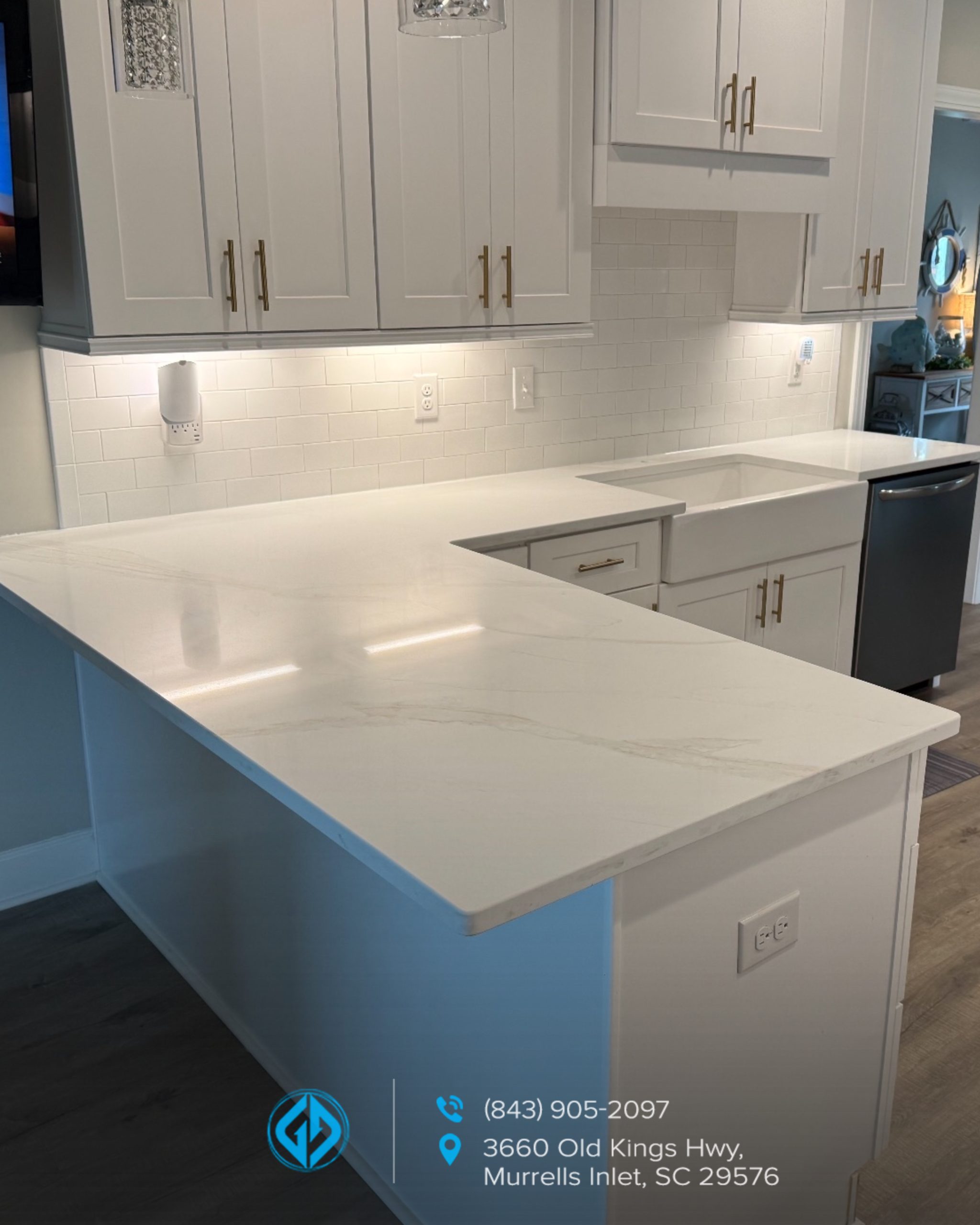
Yes, you can mix two different countertop materials in one kitchen, and it can look very intentional when the materials have a clear purpose. The most common approach is using one material on the perimeter counters and another material on the island.
At Granite Depot of Myrtle Beach, we usually recommend mixing materials only when it improves the kitchen’s function or design balance. A second material should not feel random. For homeowners working with countertop installers in Briarcliffe Acres, SC, the best mixed-countertop kitchens usually connect through color, undertone, finish, cabinet style, or backsplash choice.
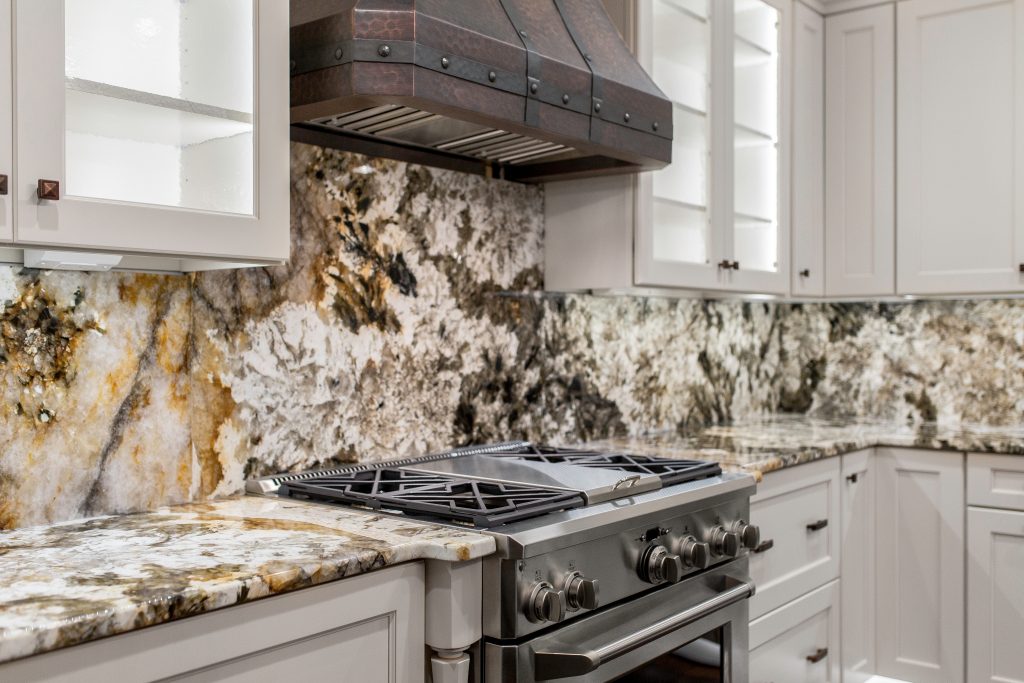
When does mixing two countertop materials make sense?
Mixing two countertop materials makes sense when different parts of the kitchen have different jobs. An island used for serving and seating may need a statement surface, while the perimeter counters may need something quieter and easier to maintain.
This can work especially well in open kitchens. A bold island can become the visual center without making every surface feel busy. A calmer perimeter countertop can keep the cooking zone practical.
| Kitchen Area | Best Material Direction | Why It Works |
|---|---|---|
| Island | Statement granite, quartzite, or marble-look quartz | Creates a focal point |
| Perimeter counters | Quiet quartz or granite | Keeps daily zones practical |
| Coffee bar | Durable quartz or sealed granite | Handles spills |
| Baking area | Marble or marble-look quartz | Smooth, classic work surface |
| Sink area | Quartz or sealed granite | Easier water cleanup |
For countertop installers in Briarcliffe Acres, SC, the most important part is making the two surfaces look planned, not leftover.
What countertop materials mix well together?
Quartz and granite often mix well together because quartz can stay calm while granite adds natural movement. Quartz and quartzite can also work together when one surface is subtle and the other is more dramatic.
Marble can be mixed with quartz, but it needs more careful planning because marble is higher-maintenance. Some homeowners use marble on a baking station or island and quartz on the main prep counters. That creates beauty where it matters visually and practicality where daily spills happen.
Granite and quartzite can also look strong together, but both have natural movement. If both slabs are busy, the kitchen may feel crowded. One material should usually lead, and the other should support it.
Should the island be different from the perimeter countertops?
The island is usually the best place to use a different countertop material because it naturally feels separate from the perimeter counters. It is often larger, more visible, and used for seating, serving, homework, and prep.
A darker island countertop can ground a light kitchen. A light quartzite island can brighten dark cabinets. A marble-look quartz island can add softness without the maintenance of real marble. The island gives homeowners more room to create contrast without overwhelming the whole kitchen.
If the kitchen is small, mixing materials can be harder. In a compact space, too much contrast can make the room feel chopped up. A subtle difference in color or pattern usually works better than a dramatic split.
How do I keep two countertop materials from clashing?
Two countertop materials work best when they share at least one common element. That can be background color, veining color, undertone, finish, or cabinet connection.
A warm white quartz can pair well with beige granite if both have soft warmth. A gray quartz can pair with a black granite if the veining or cabinet hardware connects the two. A bold quartzite island can work with plain white quartz if the backsplash stays simple.
| Connection Point | Why It Helps |
|---|---|
| Similar undertone | Keeps warm and cool colors from fighting |
| Shared veining color | Makes different materials feel related |
| Matching finish | Creates visual consistency |
| Coordinated cabinet colors | Helps each surface feel placed |
| Simple backsplash | Prevents too many patterns |
The goal is contrast with control. Strong design needs a reason.
Is quartz better for one part of the kitchen?
Quartz is often better for the busiest daily zones because it resists stains well and does not need sealing. It works especially well around sinks, coffee stations, kids’ snack areas, and prep counters.
Granite Depot of Myrtle Beach often recommends quartz for homeowners who want low-maintenance surfaces in the areas that get the most spills. Quartz can also be a smart perimeter material when the island is made from a more dramatic natural stone.
Quartz is not the strongest choice for direct heat, so trivets are still important. But for coffee, oil, sauce, crumbs, and regular wiping, quartz is usually easy to live with.

Is granite a good material to mix with quartz?
Granite is a good material to mix with quartz because it brings natural texture and movement while quartz brings consistency. This combination is common in kitchens that need both personality and practicality.
For example, a homeowner might choose soft white quartz around the sink and range, then use a darker granite on the island. Another option is a quiet granite on the perimeter with a marble-look quartz island. Both can work if the colors are coordinated.
Granite starts around $42 per square foot and performs well in active kitchens when sealed as needed. It also has strong heat resistance, which makes it practical near cooking zones.
Can marble be mixed with quartz or granite?
Marble can be mixed with quartz or granite, but it should be used in the right area. Marble is beautiful, but it is more sensitive to staining and etching from lemon juice, vinegar, wine, tomato sauce, and harsh cleaners.
A marble island can look classic and elegant, especially in a kitchen with simple cabinets. But if the island is where kids eat, guests spill drinks, or daily meal prep happens, marble may require more care than the homeowner wants. Marble-look quartz can give a similar appearance with less maintenance.
| Material | Best Mixed Use | Main Concern |
|---|---|---|
| Granite | Island or cooking zones | Needs sealing as needed |
| Quartz | Perimeter, sink, prep areas | Protect from direct heat |
| Marble | Baking area or statement island | Etching and staining |
| Quartzite | Statement island or premium perimeter | Needs sealing as needed |
A mixed kitchen should match the homeowner’s habits, not just the design trend.
How do heat, stains, and maintenance compare?
Heat, stains, and maintenance should guide where each material is placed. Granite and quartzite handle heat better, quartz resists stains better, and marble needs the most careful daily use.
| Material | Heat Resistance | Stain Resistance | Maintenance Level |
|---|---|---|---|
| Granite | High | Good when sealed | Moderate |
| Quartz | Moderate | Very good | Low |
| Marble | Good but sensitive | Moderate | Higher |
| Quartzite | High | Good when sealed | Moderate |
If the homeowner cooks heavily, granite or quartzite near the range may make sense. If the homeowner wants easy cleaning near the sink, quartz may be better. If the homeowner loves baking and accepts care requirements, marble can be considered for a dedicated zone.
What backsplash works with mixed countertops?
A simple backsplash usually works best with mixed countertops because the counters already add visual variety. If the backsplash is also busy, the kitchen can feel overloaded.
Soft white tile, warm cream tile, pale gray tile, simple handmade-look tile, or a matching slab backsplash can all work. The backsplash should connect both countertop materials without competing with either one. If one countertop has strong veining, the backsplash should stay calm.
Backsplash planning also affects fabrication. Outlet placement, range height, wall conditions, countertop thickness, and cabinet layout all influence the final look.
How much does it cost to mix countertop materials?
Mixing countertop materials can cost more, less, or about the same depending on the materials chosen and how slabs are used. The final price depends on square footage, slab selection, edge profiles, sink cutouts, cooktop openings, seams, backsplash pieces, fabrication, and installation.
| Material | Starting Price | Mixed-Kitchen Note |
|---|---|---|
| Granite | From about $42 per sq. ft. | Good for islands or heat-heavy areas |
| Quartz | From about $55 per sq. ft. | Practical for perimeter counters |
| Marble | From about $55 per sq. ft. | Best for lower-risk statement areas |
| Quartzite | From about $75 per sq. ft. | Strong premium focal material |
Granite Depot of Myrtle Beach reviews the full layout before fabrication so homeowners understand what affects the price. For countertop installers in Briarcliffe Acres, SC, a clear estimate should explain both materials, templating, fabrication, installation, edge work, sink cutouts, seams, and backsplash options.
How long does a mixed-countertop project take?
Most countertop projects take about 7-10 days after final measurements. A mixed-material kitchen follows the same basic process, but slab coordination and layout planning may take more attention.
Cabinets must be installed, level, and secure before templating. Sink type, faucet holes, cooktop openings, overhangs, seam placement, island size, and backsplash height should be confirmed before fabrication begins. If two materials are being used, both selections should be finalized before the project moves into cutting.
At Granite Depot of Myrtle Beach, we explain this timeline early because mixed countertops need clear planning. For countertop installers in Briarcliffe Acres, SC, the 7-10 day process helps coordinate material selection, fabrication, installation, plumbing, and backsplash work.
What mistakes should homeowners avoid when mixing countertops?
The biggest mistake is choosing two statement materials that compete with each other. A bold granite perimeter and a bold quartzite island can look chaotic if the colors, movement, and backsplash are not controlled.
Another mistake is ignoring finish. A polished island and honed perimeter can work, but the difference should feel intentional. If the finishes look mismatched by accident, the kitchen may feel unfinished.
Before choosing two materials, review:
- Cabinet color and undertone
- Flooring color
- Backsplash sample
- Veining direction
- Finish choice
- Island size
- Sink and cooktop placement
- Daily cooking habits
- Lighting
- Long-term maintenance
Two countertop materials can look expensive when they are coordinated. They can look confusing when they are chosen separately.
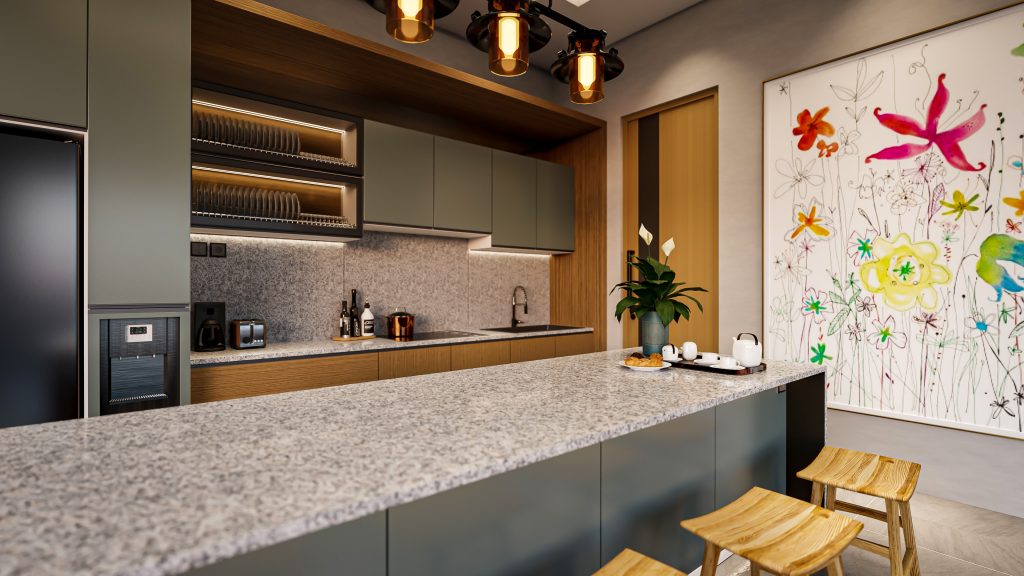
FAQ: Mixing countertop materials
Can I use two different countertop materials in one kitchen?
Yes. Many kitchens use one material on the island and another on the perimeter counters.
What two countertop materials work best together?
Quartz and granite often work well together because quartz offers consistency and granite adds natural movement.
Should the island countertop be different?
It can be. The island is usually the easiest place to use a statement material because it naturally stands apart.
Is it cheaper to mix countertop materials?
Sometimes. It depends on slab choice, square footage, cutouts, edges, seams, backsplash pieces, fabrication, and installation.
Can I mix marble with quartz?
Yes, but marble needs more care. Many homeowners use marble-look quartz instead when they want a similar style with easier maintenance.
How much do countertops start at?
Granite starts around $42 per square foot, quartz around $55, marble around $55, and quartzite around $75.
How long does countertop installation take?
Most projects take about 7-10 days after final measurements, depending on material, fabrication, cutouts, seams, and scheduling.
What should I ask countertop installers in Briarcliffe Acres, SC before mixing materials?
Ask how the two materials will connect through color, finish, edge profile, seam planning, backsplash design, fabrication, installation, and maintenance needs.
Where can homeowners near Briarcliffe Acres, SC get help mixing countertop materials?
Granite Depot of Myrtle Beach is located in Myrtle Beach, SC and serves nearby communities, including Briarcliffe Acres, SC. We help homeowners compare granite, quartz, marble, and quartzite, work with countertop installers in Briarcliffe Acres, SC, plan mixed-material kitchens, handle fabrication, schedule installation, and coordinate backsplash details. Our team can help make two countertop materials feel connected, useful, and natural in one kitchen.