

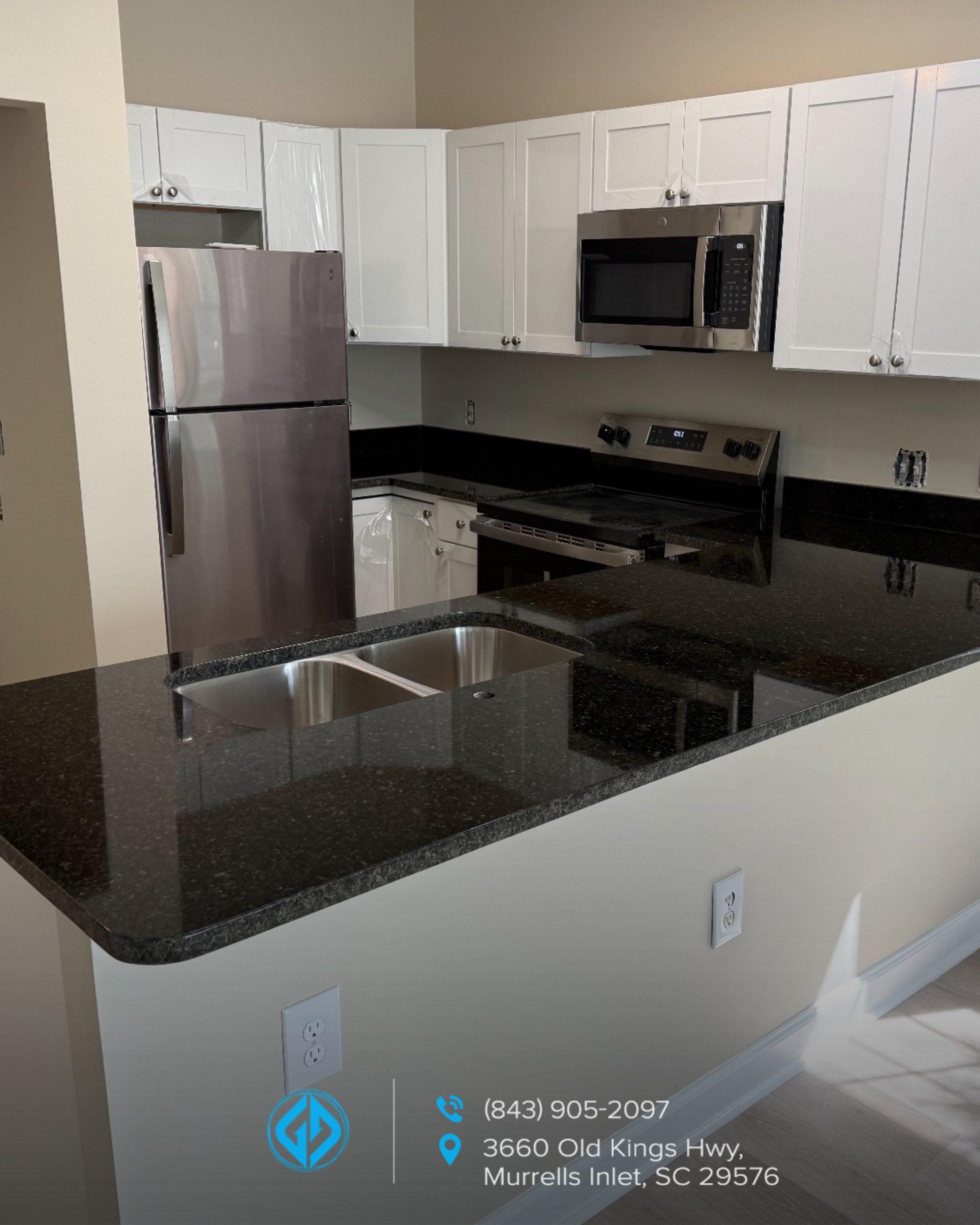
The best countertop for a kitchen island with seating is usually quartz, granite, or quartzite, depending on how the island will be used. Quartz is easiest for stain resistance and daily cleanup. Granite and quartzite are strong choices when the island needs natural stone character, heat resistance, and a more dramatic look.
At Granite Depot of Myrtle Beach, we usually start with one practical question: will people mostly sit, eat, cook, serve, do homework, or prep food at this island? Seating changes the countertop decision because the surface has to handle elbows, spills, plates, laptops, backpacks, bar stools, and overhang support. For homeowners comparing countertops in Briarcliffe Acres, SC, the best island surface should look good from the living area and still work hard every day.
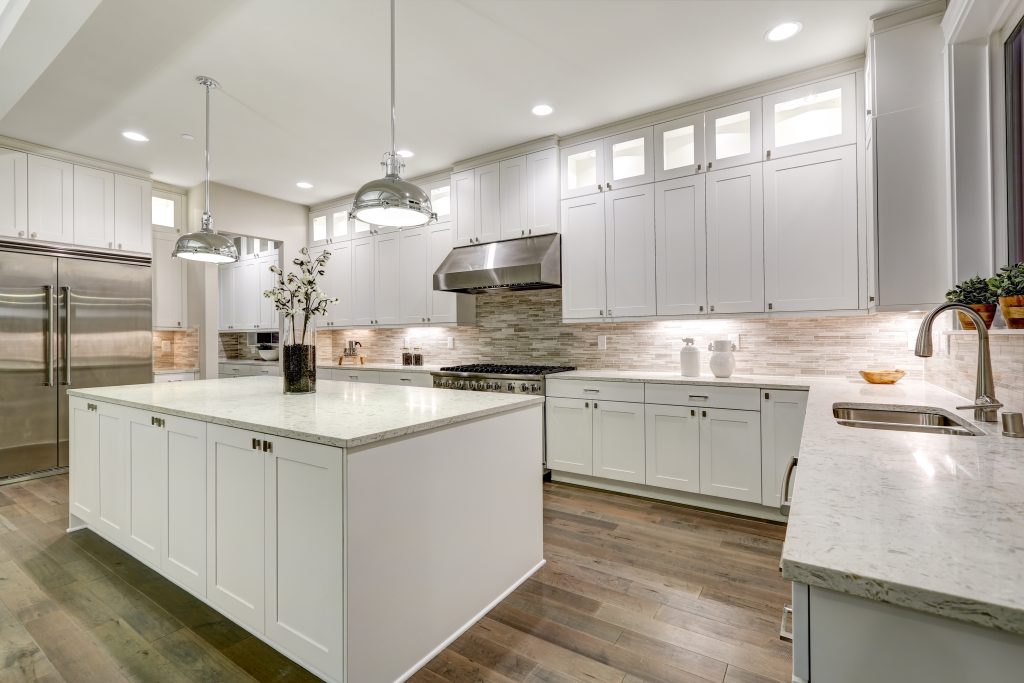
What matters most for a kitchen island with seating?
The most important factors are durability, stain resistance, overhang support, edge comfort, slab size, seam placement, and maintenance. A kitchen island with seating is not just a prep surface. It becomes a table, serving area, conversation spot, and sometimes a work zone.
People lean on island edges. Kids kick bar stools against the overhang. Guests set down wine glasses, coffee cups, and plates. That means the countertop needs to be strong, comfortable, and easy to clean.
| Island Feature | Why It Matters |
|---|---|
| Overhang | Creates knee space for seating |
| Edge profile | Affects comfort and safety |
| Stain resistance | Helps with drinks, sauces, and snacks |
| Seam planning | Keeps the island looking clean |
| Slab size | May reduce seams on large islands |
| Support brackets | Protect longer overhangs |
For countertops in Briarcliffe Acres, SC, island planning should happen before fabrication, not after the slab is chosen.
Is quartz best for an island with seating?
Quartz is often the best choice for a kitchen island with seating when the homeowner wants easy cleaning and strong stain resistance. It does not need sealing and works well for families, open kitchens, and high-use islands.
Quartz handles coffee, juice, oil, sauces, crumbs, and everyday wiping very well. That matters because seated islands collect more casual mess than perimeter counters. People eat there, place bags there, and use the island even when they are not cooking.
The main caution is heat. Hot pans should not be placed directly on quartz. A trivet or hot pad is still needed, especially on an island used for serving food from the oven or stove.
Is granite a good island countertop?
Granite is a good island countertop when the homeowner wants natural variation, strong heat resistance, and a surface that can handle active kitchen use. It works especially well when the island is meant to be a visual anchor.
Some granite slabs are calm and lightly speckled. Others have bold movement that turns the island into the main design feature. A granite island can pair well with painted cabinets, wood cabinets, simple backsplashes, and neutral perimeter counters.
Granite starts around $42 per square foot and should be sealed as needed. For countertops in Briarcliffe Acres, SC, granite can be a smart choice when the island is used for cooking, serving, and gathering.
Should I choose marble for an island with seating?
Marble can be beautiful for an island with seating, but it is usually higher-maintenance than quartz or granite. It can stain and etch from lemon juice, vinegar, wine, tomato sauce, coffee, and harsh cleaners.
A marble island looks classic and expensive, especially with soft white cabinets or natural wood. But the surface will likely develop signs of use over time. Some homeowners love that natural patina. Others find it stressful.
If the island is mainly decorative or used for light baking, marble can work. If it is where kids eat breakfast, guests spill drinks, and daily prep happens, marble-look quartz may be easier to live with.
Is quartzite worth it for a kitchen island?
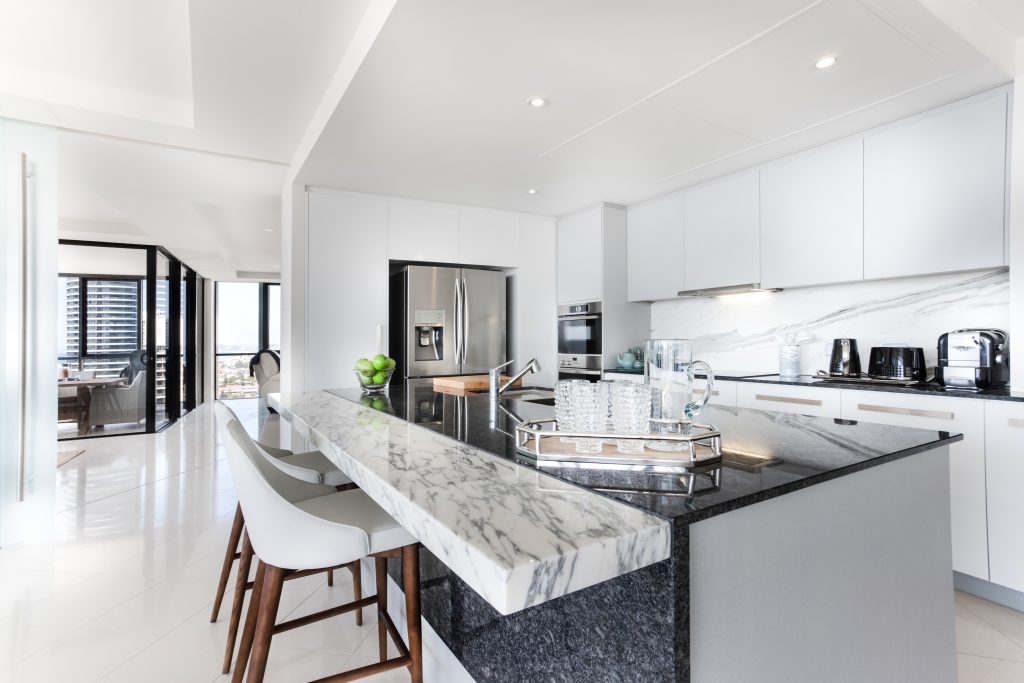
Quartzite can be worth it for a kitchen island when the homeowner wants a premium natural stone look with strong durability. It often has dramatic movement, depth, and color variation that makes an island feel custom.
Quartzite is usually harder and more heat-resistant than many common countertop options, but it still needs sealing as needed. It also requires careful fabrication because dense natural stone must be cut, edged, and installed properly.
Granite Depot of Myrtle Beach often recommends viewing quartzite slabs in person. A small sample may not show the full movement, and island layout depends heavily on vein direction, slab size, and seam placement.
How do island countertop materials compare?
Quartz is usually the easiest to maintain, granite is strong and natural, marble is classic but more sensitive, and quartzite offers a premium natural stone look. The best choice depends on how much maintenance the homeowner accepts.
| Material | Heat Resistance | Stain Resistance | Maintenance Level | Best Island Use |
|---|---|---|---|---|
| Granite | High | Good when sealed | Moderate | Cooking, serving, natural stone look |
| Quartz | Moderate | Very good | Low | Family seating, snacks, everyday use |
| Marble | Good but sensitive | Moderate | Higher | Baking, classic statement island |
| Quartzite | High | Good when sealed | Moderate | Premium focal island |
For an island with seating, stain resistance and edge comfort often matter as much as appearance.
What edge profile is best for an island with seating?
A slightly rounded or softened edge is usually best for an island with seating because people sit close to the countertop and rest their arms near the edge. Sharp-looking edges can feel uncomfortable during meals.
An eased edge is simple, clean, and practical. A pencil round edge softens the feel without looking too decorative. More detailed edges can work in traditional kitchens, but they may add cost and collect more crumbs.
| Edge Profile | Comfort Level | Best Style |
|---|---|---|
| Eased edge | Good | Modern and transitional |
| Pencil round | Very good | Family-friendly kitchens |
| Beveled edge | Moderate | Clean, slightly angled look |
| Ogee edge | Moderate | Traditional kitchens |
| Mitered edge | Good visual impact | Thick, modern island look |
An island edge should look finished and feel comfortable from a seated position.
How much overhang do I need for island seating?
Most island seating needs enough overhang for knees, stools, and comfortable movement. The exact size depends on island height, seating style, countertop material, cabinet depth, and support requirements.
A small overhang may work for quick seating, but it can feel tight. A deeper overhang is more comfortable, but it may need support brackets or hidden steel support depending on the stone, layout, and span. This is one of the details that should be checked before fabrication.
A beautiful island can still feel awkward if people cannot sit comfortably. Seating should be planned like part of the countertop design, not as an afterthought.
How do seams affect a large kitchen island?
Seams affect a large island because the island is usually one of the most visible surfaces in the kitchen. If a seam is needed, it should be planned carefully for both structure and appearance.
Large islands may require a big slab or a seam depending on dimensions and material availability. Bold veining makes seam planning more important because the pattern should connect as naturally as possible. With quieter quartz or speckled granite, seams may be less noticeable.
Homeowners should ask where seams will be before fabrication starts. A seam that seems minor on paper may be obvious on a large island surface.
How much do island countertops cost?
Island countertop pricing depends on material, square footage, slab selection, overhang, edge profile, seams, sink cutouts, cooktop openings, fabrication, delivery, and installation. Granite starts around $42 per square foot, quartz around $55, marble around $55, and quartzite around $75.
| Material | Starting Price | Good Island Fit |
|---|---|---|
| Granite | From about $42 per sq. ft. | Durable natural stone island |
| Quartz | From about $55 per sq. ft. | Low-maintenance seating island |
| Marble | From about $55 per sq. ft. | Classic statement island |
| Quartzite | From about $75 per sq. ft. | Premium natural focal point |
Granite Depot of Myrtle Beach reviews the full island layout before final pricing. For countertops in Briarcliffe Acres, SC, a clear estimate should include material, templating, fabrication, installation, edge work, overhang support, seams, cutouts, and backsplash coordination when needed.
How long does island countertop installation take?
Most countertop projects take about 7-10 days after final measurements. This includes templating, slab layout, fabrication, edge finishing, cutouts, scheduling, and installation.
An island with seating needs careful measuring because overhangs, stool space, support brackets, seam placement, and edge profile all affect the finished result. Cabinets must be installed, level, and secure before templating. Sink, faucet, cooktop, and outlet details should also be finalized before cutting begins.
At Granite Depot of Myrtle Beach, we explain this timeline early so homeowners can plan around kitchen access and installation day. For countertops in Briarcliffe Acres, SC, the 7-10 day process helps keep fabrication, delivery, installation, and final adjustments organized.
What mistakes should homeowners avoid?
The biggest mistake is choosing the island countertop only by appearance. An island with seating needs to fit the way people actually live in the kitchen.
A bold slab may look beautiful but feel stressful if it stains easily. A sharp edge may look clean but feel uncomfortable when people sit there. A deep overhang may look generous but need support to stay safe.
Before choosing an island countertop, review:
- How many seats the island needs
- Overhang depth
- Edge comfort
- Stain resistance
- Heat expectations
- Slab size
- Seam placement
- Cabinet support
- Sink or cooktop placement
- Cleaning habits
- Lighting and cabinet color
The best island countertop is the one that handles meals, conversation, prep, and daily mess without becoming a problem.
FAQ: Kitchen island countertops with seating
What countertop is best for a kitchen island with seating?
Quartz is often best for low maintenance, granite is strong and natural, and quartzite works well for a premium statement island.
Is quartz good for an island where people eat?
Yes. Quartz resists stains well, does not need sealing, and is easy to wipe after meals and snacks.
Is granite better than quartz for heat?
Granite usually handles heat better than quartz, but trivets are still recommended for long-term protection.
Is marble a good island countertop?
Marble can work, but it stains and etches more easily than quartz or granite. It is best for homeowners who accept natural wear.
How much do island countertops start at?
Granite starts around $42 per square foot, quartz around $55, marble around $55, and quartzite around $75.
How long does installation take?
Most countertop projects take about 7-10 days after final measurements, depending on material, fabrication, cutouts, seams, and scheduling.
Do island countertops need support for seating overhangs?
Often, yes. Deeper overhangs may need brackets, corbels, or hidden support depending on material, span, and cabinet structure.
Where can homeowners near Briarcliffe Acres, SC get help choosing an island countertop?
Granite Depot of Myrtle Beach is located in Myrtle Beach, SC and serves nearby communities, including Briarcliffe Acres, SC. We help homeowners compare granite, quartz, marble, and quartzite, plan countertops in Briarcliffe Acres, SC, handle fabrication, schedule installation, and coordinate island details like overhangs, seams, edges, cutouts, and backsplash options. Our team can help choose a kitchen island surface that feels comfortable for seating and strong enough for everyday use.