


Marble stains should be removed based on what caused the stain, not with one universal cleaner. Oil, coffee, rust, makeup, soap residue, and acidic spills all need different treatment because marble is porous and sensitive to acids.
At Granite Depot of Myrtle Beach, we always remind homeowners that marble is beautiful, but it is not a “scrub harder” material. For homeowners maintaining marble countertops in Pamplico, SC, the safest approach is to identify the stain first, clean gently, and avoid harsh products that can make the damage worse.
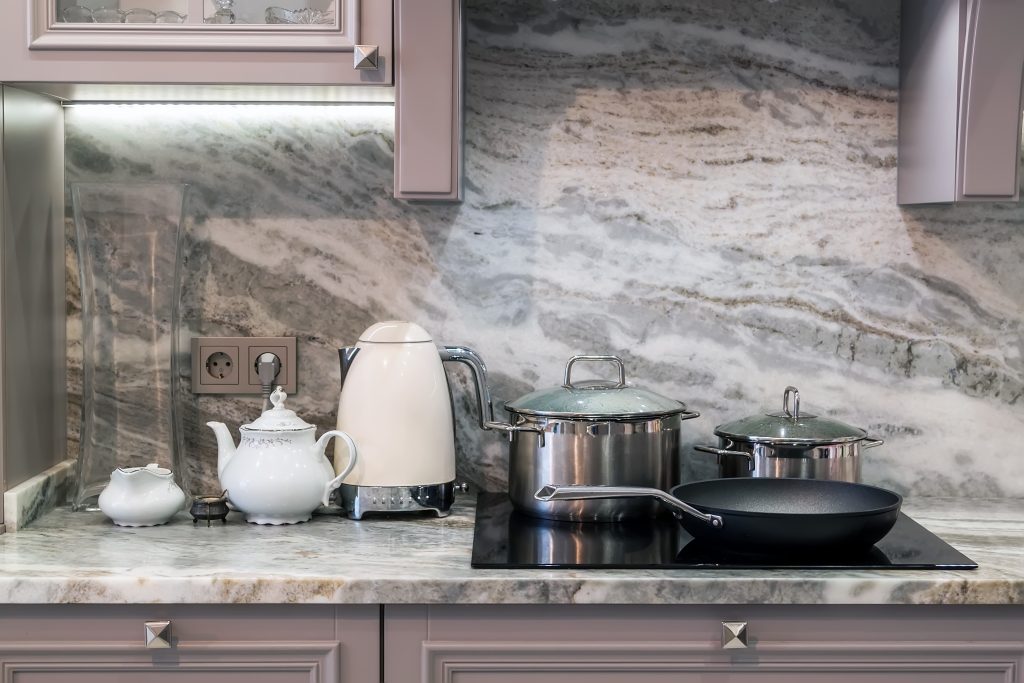
What is the first thing to do when marble gets stained?
The first step is to blot the spill immediately and avoid rubbing it into the stone. Marble can absorb liquids, so quick action matters more than aggressive cleaning.
Use a soft cloth or paper towel to blot the area. Then clean with warm water and a small amount of pH-neutral stone cleaner or mild dish soap. Dry the surface completely so water and residue do not sit on the stone.
Do not use vinegar, lemon juice, bleach, ammonia, abrasive powders, or bathroom cleaners on marble. These can etch the surface, which creates dull marks that look like stains but are actually surface damage.
| Spill or Mark | First Response | What Not to Use |
|---|---|---|
| Coffee or tea | Blot, clean with pH-neutral cleaner | Vinegar or bleach |
| Cooking oil | Blot, use mild soap, consider poultice | Abrasive scrub pads |
| Makeup | Clean gently with mild soap | Harsh bathroom sprays |
| Lemon or vinegar | Wipe immediately, rinse, dry | More acidic cleaner |
| Rust mark | Use stone-safe rust remover | Random household rust products |
Is it a stain or an etch mark?
A stain darkens or discolors the marble, while an etch mark looks dull, cloudy, or lighter because acid has damaged the surface. This difference matters because stains and etches are treated differently.
A coffee stain may leave a brownish mark. Oil may darken the stone. Rust may appear orange or reddish. An etch from lemon juice, vinegar, or some cleaners usually looks like a dull spot that catches light differently.
If the mark feels smooth but looks dull, it may be etching. If the stone looks darker or colored, it may be staining. Many homeowners mistake etching for staining and try to clean it harder, which can make the surface look worse.
When we talk with clients about marble countertops in Pamplico, SC, this is one of the most important care lessons. The wrong diagnosis can lead to the wrong cleaning method.
How do you remove oil stains from marble?
Oil stains usually need a poultice because the oil can sink below the surface. Soap alone may clean the top but leave a darker mark inside the stone.
A poultice is a paste that draws the stain out as it dries. For oil-based stains, a stone-safe poultice product is usually the safest choice. Some homeowners use baking soda and water for mild stains, but marble should always be tested in a hidden area first.
Basic poultice steps:
- Clean the area with mild soap and water.
- Dry the marble completely.
- Apply the poultice over the stain.
- Cover with plastic wrap and tape the edges.
- Let it sit for the recommended time.
- Remove the paste gently.
- Rinse with water and dry.
- Repeat if the stain lightens but does not fully disappear.
Deep oil stains may take more than one round. If the stain is old, professional help may be needed.

How do you remove coffee, tea, or wine stains from marble?
Organic stains from coffee, tea, or wine may respond to a poultice made for natural stone. The sooner the stain is treated, the better the result.
These stains are common in kitchens, bathrooms, and vanity areas. Coffee near the sink, tea mugs on a bathroom vanity, wine during guests’ visits, or dark liquids left overnight can discolor marble.
| Stain Type | Likely Cause | Best Approach |
|---|---|---|
| Brown stain | Coffee or tea | Stone-safe poultice |
| Purple or red stain | Wine or berries | Poultice, quick treatment |
| Yellowish stain | Soap, product buildup, aging sealer | Gentle cleaning first |
| Dark ring | Oil, lotion, or absorption | Oil-targeting poultice |
For marble countertops in Pamplico, SC, we recommend keeping coasters, trays, and a soft cloth nearby. Small habits prevent most stains before they become a repair project.
How do you remove rust stains from marble?
Rust stains on marble should be treated with a stone-safe rust remover, not a regular household rust cleaner. Many rust products are acidic and can damage marble.
Rust marks often come from metal cans, shaving cream containers, hair tools, decorative trays, or wet metal objects left on the surface. In bathrooms, rust can appear faster because water sits near sinks and vanity areas.
A rust stain can be stubborn. If the mark is deep, it may not come out with a simple cleaner. In that case, a professional stone technician may need to treat it.
For marble, the safest rule is simple: do not experiment with strong chemicals. One wrong product can turn a small orange mark into a larger dull patch.
What cleaners are safe for marble?
Safe marble cleaners are pH-neutral, non-abrasive, and made for natural stone. Mild dish soap and warm water can work for routine cleaning, but heavy soap use can leave residue over time.
A good daily routine should be boring. That is a compliment. Marble does not need strong fragrance, foam, or disinfecting sprays for normal care.
| Cleaner Type | Safe for Marble? | Notes |
|---|---|---|
| pH-neutral stone cleaner | Yes | Best routine option |
| Mild soap and water | Yes | Use lightly, rinse, dry |
| Vinegar | No | Acid can etch marble |
| Lemon cleaner | No | Acid can dull the surface |
| Bleach | No | Too harsh for regular use |
| Abrasive powder | No | Can scratch or dull finish |
At Granite Depot of Myrtle Beach, we tell customers that the best cleaner is the one that protects the finish. Marble should feel clean after wiping, not stripped.
How do marble, granite, quartz, and quartzite compare for stains?
Marble is more sensitive to stains and etching than granite, quartz, and quartzite. Quartz is usually the easiest to maintain, while granite and quartzite are durable natural stone options when sealed properly.
This does not mean marble is a bad choice. It means homeowners should understand its personality. Marble develops character over time. Some people love that natural patina, while others prefer a surface that stays more uniform.
| Material | Stain Resistance | Etch Resistance | Maintenance Level |
|---|---|---|---|
| Marble | Moderate | Low | Higher |
| Granite | Good when sealed | Good | Moderate |
| Quartz | Very good | Good | Low |
| Quartzite | Good when sealed | Good | Moderate |
Marble works best for homeowners who are comfortable with careful cleaning and quick spill response. Granite, quartz, and quartzite may be better for people who want less worry.
How much do marble and other countertops cost?
Marble often starts around $55 per square foot, while granite starts around $42, quartz around $55, and quartzite around $75. Final pricing depends on slab selection, square footage, edge detail, sink cutouts, fabrication, installation, and backsplash needs.
| Material | Starting Price | Best Fit |
|---|---|---|
| Granite | From about $42 per sq. ft. | Strong everyday kitchens |
| Quartz | From about $55 per sq. ft. | Low-maintenance homes |
| Marble | From about $55 per sq. ft. | Elegant kitchens and baths |
| Quartzite | From about $75 per sq. ft. | Premium natural stone projects |
If you are pricing marble countertops in Pamplico, SC, the slab is only one part of the estimate. Fabrication, edge profile, installation, sink cutout, backsplash pieces, and removal of old countertops can all affect the final number.
Granite Depot of Myrtle Beach helps homeowners compare the material cost with the real maintenance expectations. A surface should fit both the design and the way the home is used.
How long does countertop fabrication and installation take?
Most countertop projects take about 7 to 10 days after final measurements, depending on material availability, fabrication schedule, layout, sink details, and installation timing.
The process works best when cabinets or vanities are installed, level, and ready before templating. Marble, granite, quartz, and quartzite are cut to exact measurements, so the preparation stage matters.
Granite Depot of Myrtle Beach includes fabrication and installation planning because stone performance depends on more than the slab. Proper support, clean cutouts, and correct installation help the surface last.
How can you prevent marble stains in the future?
The best way to prevent marble stains is to seal the stone as needed, wipe spills quickly, use trays under products, and avoid acidic cleaners. Prevention is much easier than stain removal.
For bathrooms, keep cosmetics, perfume, toothpaste, and hair products on trays. For kitchens, use cutting boards, coasters, and trivets. For both spaces, dry water around sinks before it leaves mineral marks or product rings.
Simple marble habits:
- Wipe spills quickly.
- Use pH-neutral cleaners.
- Keep acidic products away.
- Use trays under bathroom items.
- Seal marble when water absorbs quickly.
- Avoid dragging metal or heavy objects.
- Do not use vinegar or lemon-based cleaners.
For homeowners with marble countertops in Pamplico, SC, this routine helps preserve the stone without making daily life complicated.
FAQ: Removing stains from marble countertops
Can marble stains be removed completely?
Some marble stains can be removed completely, especially if treated early. Deep or old stains may only lighten.
Can I use baking soda on marble?
Sometimes, but carefully. Baking soda can be used in mild poultices, but it should be tested first and removed gently.
Why does lemon juice leave a dull mark on marble?
Lemon juice is acidic and can etch marble. Etching is surface damage, not a regular stain.
How often should marble be sealed?
Many marble countertops need sealing every 6 to 12 months, but the timing depends on use, stone density, and water absorption.
Is quartz easier than marble?
Yes. Quartz is easier to maintain because it does not need sealing and resists stains better.
What is the starting price for marble countertops?
Marble often starts around $55 per square foot. Final cost depends on slab choice, fabrication, installation, and project details.
How long does installation take?
Most countertop projects take about 7 to 10 days after final measurements, depending on material, fabrication, and scheduling.
Where can homeowners near Pamplico, SC get marble countertop help?
Granite Depot of Myrtle Beach is located in Myrtle Beach, SC and serves nearby communities, including Pamplico, SC. We help homeowners compare marble, granite, quartz, and quartzite, plan fabrication, schedule installation, and understand proper cleaning and sealing. For homeowners choosing marble countertops in Pamplico, SC, our team can explain how to protect the stone before stains become a bigger problem.
Phone: (843) 905-2097
Address: 3660 Old Kings Hwy, Murrells Inlet, SC 29576