


A short countertop ledge is usually the better choice when we want a simple, flexible kitchen design, while a full-height backsplash is better when wall protection and visual impact are the priorities. Neither option is automatically right for every kitchen.
When we plan granite kitchen countertops in Forestbrook, SC, we consider the countertop and backsplash together rather than treating them as separate decisions. The stone pattern, cabinet color, cooking habits, wall layout, and amount of natural light can all affect which option makes more sense.
At Granite Depot of Myrtle Beach, we help homeowners compare the practical differences before fabrication begins. A few inches of backsplash and a full wall of material can create very different results, even when the same countertop is used.
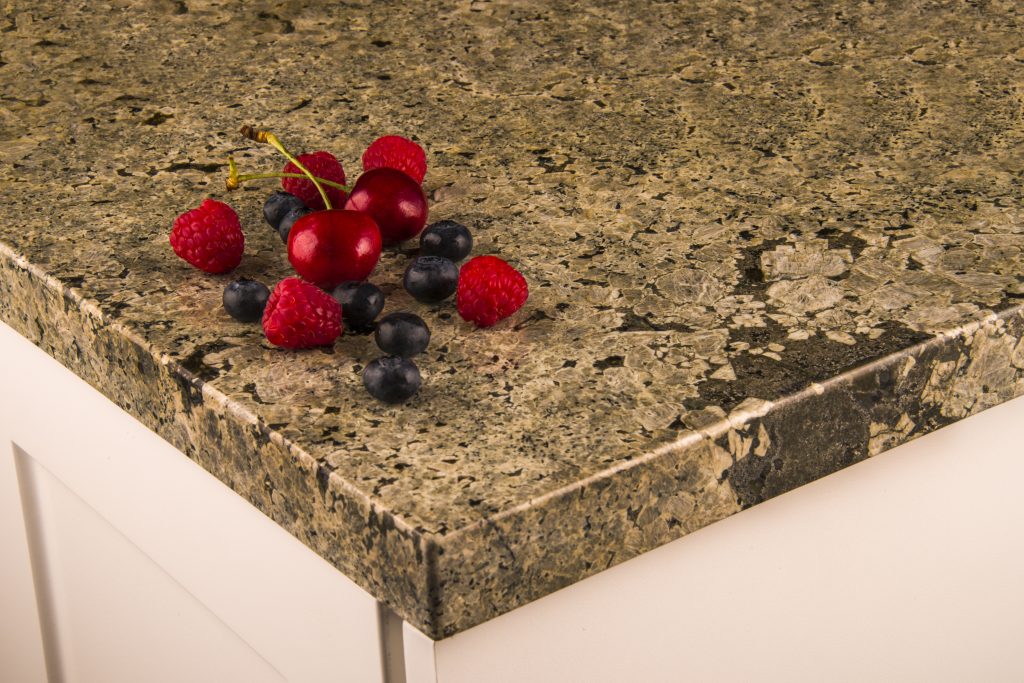
What is a short countertop ledge?
A short countertop ledge is a narrow strip of material installed along the wall behind the countertop, usually extending several inches above the counter. We use this approach when homeowners want basic splash protection without covering most of the wall.
The ledge can be made from the same granite, quartz, or other countertop material. Because it sits directly on the counter, it creates a clean transition while leaving the rest of the wall available for paint, tile, shelves, or other design elements.
This option is particularly useful when the kitchen already has enough visual detail. A patterned countertop, decorative cabinets, and statement lighting may not need another large design feature competing for attention.
What is a full-height backsplash?
A full-height backsplash covers much more of the wall, often extending from the countertop to the bottom of the upper cabinets, range hood, or another planned stopping point. We typically consider it when protection and the backsplash itself are important parts of the design.
Full-height backsplashes can be made from slab materials such as quartz, granite, and marble, or from ceramic and porcelain tile. Each option creates a different combination of texture, seams, maintenance, and visual movement.
A full slab backsplash can also continue the countertop pattern vertically. This is useful when we want the stone to become one of the main visual features of the room instead of simply serving as a practical surface behind the counter.
Is a short ledge easier to maintain?
Yes, a short ledge generally requires less cleaning because it covers less surface area. We still recommend wiping it regularly, especially behind sinks and other areas where water or food can collect.
The main advantage is the wall above it. With a short ledge, homeowners can use washable paint or another wall finish that can be changed later without removing a large backsplash installation.
A full-height backsplash can require more cleaning simply because there is more material to wipe. However, it can also make cleaning easier in high-splash areas because grease and water are landing on a purpose-built surface rather than painted drywall.
| Feature | Short Countertop Ledge | Full-Height Backsplash |
|---|---|---|
| Wall coverage | Limited | Extensive |
| Splash protection | Basic | Strong |
| Cleaning area | Smaller | Larger |
| Design impact | Subtle | High |
| Future wall changes | Easier | More involved |
| Material required | Less | More |
| Best for | Low-to-moderate splash areas | Ranges, sinks, busy kitchens |
Does a full-height backsplash protect the wall better?
Yes, a full-height backsplash provides substantially more protection from water, grease, cooking residue, and everyday splashes. We especially consider it behind a range, sink, coffee station, or other frequently used work area.
A short ledge protects only the lower portion of the wall. If someone regularly cooks sauces, fries food, or washes dishes at a sink positioned against the wall, the exposed area above the ledge may still need frequent cleaning or repainting.
We do not always have to choose one height for the entire kitchen. A mixed approach can provide full-height protection in the busiest area while keeping the rest of the kitchen visually lighter.
Which option looks better with granite countertops?
Neither option automatically looks better, because the right choice depends on the granite’s color, movement, and surrounding finishes. When we design granite kitchen countertops in Forestbrook, SC, we first look at how much visual activity the slab already provides.
Granite with strong veining or multiple mineral colors can work beautifully with a simple short ledge. Keeping the wall quieter allows the natural stone to remain the focal point.
More consistent granite can support a stronger backsplash. In that situation, a full-height surface can add texture, contrast, or another layer of color without making the kitchen feel visually crowded.
We also consider the cabinet style. Detailed traditional cabinetry may pair better with a restrained backsplash, while simple shaker or flat-panel cabinets can provide more room for a dramatic stone wall.
Is a full-height backsplash more expensive?
Yes, a full-height backsplash generally costs more because we are covering significantly more square footage and may need additional fabrication, installation, wall preparation, and outlet cutouts. The exact difference depends on the material and the size and complexity of the kitchen.
For reference, the provided countertop material prices for this project are:
| Material | Provided Price |
|---|---|
| Granite | $42/sq. ft. |
| Quartz | $55/sq. ft. |
| Marble | $55/sq. ft. |
| Quartzite | $75/sq. ft. |
These are material prices provided for comparison and should not be interpreted as a complete installed backsplash price. The final project can also involve templating, fabrication, edge work, seams, cutouts, delivery, and installation.
At Granite Depot of Myrtle Beach, we also look at whether leftover slab material can be used effectively. When the layout allows it, using the same stone for the countertop and backsplash can create a much more continuous appearance.
Is a full-height slab backsplash better than tile?
A full-height slab is usually better when we want a continuous surface with fewer grout lines, while tile is better when we want more flexibility with patterns, textures, and smaller design details. Both can be practical choices.
Quartz slab backsplashes can create a clean, consistent look and coordinate closely with quartz countertops. Marble can introduce natural movement and veining, while granite can visually continue a granite countertop.
Tile gives us more freedom around corners, outlets, niches, and unusual wall dimensions. It can also create a completely different style without requiring the backsplash to look like an extension of the countertop.
Which option works better for a busy family kitchen?
A full-height backsplash is usually the more practical choice for a busy family kitchen because it protects more of the wall from daily messes. When we design granite kitchen countertops in Forestbrook, SC, we pay particular attention to areas where children, frequent cooking, or heavy sink use can increase splashing.
Still, we do not believe every wall needs to be covered. We can use a full-height backsplash behind the range and sink while keeping a short ledge along less active countertop runs.
This approach gives us a useful balance. The busiest areas receive more protection, while the rest of the kitchen retains a lighter appearance and requires less backsplash material.

Can a short ledge work in a modern kitchen?
Yes, a short ledge can work especially well in modern kitchens because it keeps the countertop-to-wall transition clean and understated. We often pair it with simple cabinet doors, minimal hardware, open shelving, and relatively quiet wall colors.
It also provides flexibility for future changes. If the homeowner wants to repaint the kitchen in two years, the wall above the ledge can usually be updated without changing the countertop installation.
For a kitchen with bold granite or another strongly patterned material, this simplicity can be useful. We can let the countertop provide the visual character instead of adding another large pattern directly above it.
How should the backsplash relate to the cabinets?
The backsplash should support the cabinets rather than compete with them. We usually start by identifying whether the cabinetry is the dominant visual element or whether the countertop should take that role.
With white or neutral cabinets, both a short ledge and full-height backsplash can work. With dark wood or heavily detailed cabinetry, a quieter backsplash can keep the room from feeling overly busy.
Color temperature matters too. Warm beige, cream, and taupe surfaces can coordinate with natural wood, while cooler whites and grays may work better with painted cabinets in cool tones.
How does backsplash choice affect countertop installation?
The backsplash decision should be made before fabrication because it can affect measurements, finished elevations, wall preparation, and how the countertop meets the wall. We prefer to know the intended backsplash height and material before the final fabrication plan is approved.
Our typical process includes:
- Confirming that the cabinets are level and ready.
- Taking final measurements and creating the template.
- Selecting the countertop and backsplash materials.
- Planning sink, cooktop, and outlet cutouts.
- Fabricating and finishing the countertop.
- Installing the countertop.
- Installing the planned backsplash.
- Completing seams and final adjustments.
Many countertop projects can be completed within approximately 7-10 days after templating, depending on material availability and fabrication requirements. More involved backsplash work may require additional time.
At Granite Depot of Myrtle Beach, we coordinate the countertop and backsplash so the finished elevations, seams, edges, and transitions work together rather than treating the backsplash as an afterthought.
Can you combine a short ledge with a full-height backsplash?
Yes, combining the two can be one of the most practical solutions. We can keep a short ledge along longer countertop runs and use full-height material only where the kitchen needs more protection.
This also creates visual hierarchy. A full-height section behind the range can become a focal point, while a short ledge around the remaining counters keeps the room from feeling overloaded.
The approach works particularly well when the homeowner wants a premium stone backsplash but does not want to cover every available wall with it.
What should you choose for a small kitchen?
A short ledge is often the better option for a small kitchen when we want to preserve visual openness. Less wall coverage can make the room feel less enclosed, especially when the cabinets and countertop already occupy much of the visual field.
A light full-height backsplash can still work in a small space. If the material has low contrast and minimal pattern, the continuous surface can actually make the kitchen feel more unified.
We look at the kitchen’s natural light, cabinet height, countertop pattern, wall dimensions, and overall color palette before making the recommendation.

What are the main pros and cons?
A short ledge is best when we prioritize flexibility and a simple appearance. A full-height backsplash is best when protection and visual impact are more important.
Short ledge:
- Uses less material.
- Provides basic splash protection.
- Leaves more wall visible.
- Makes future wall-color changes easier.
- Works well with busy countertop patterns.
Full-height backsplash:
- Protects more of the wall.
- Works particularly well behind ranges and sinks.
- Can create a dramatic focal point.
- Can visually extend the countertop material upward.
- Requires more material and installation work.
FAQ: Short Countertop Ledge vs. Full-Height Backsplash
Is a short backsplash enough behind a sink?
Yes, it can be sufficient for moderate splash levels. We may recommend additional height when the sink is heavily used or positioned directly against the wall.
Is a full-height backsplash worth the extra cost?
It can be worth it when wall protection, easier cleanup, or a strong design statement is important. We base the recommendation on how the kitchen will actually be used.
Can granite be used as a backsplash?
Yes. We can fabricate granite backsplash pieces and coordinate them with the countertop when the slab and layout are suitable.
Is quartz a good material for a full-height backsplash?
Yes. Quartz can provide a consistent appearance and create a clean visual transition with a quartz countertop.
Which option is easier to change later?
A short ledge generally provides more flexibility because the wall above it can be repainted or redesigned without removing a large backsplash.
Can a backsplash be installed after the countertop?
Yes. We commonly coordinate backsplash installation after the countertop has been installed and the final dimensions are confirmed.
How much does countertop material cost?
The provided material prices are $42 per square foot for granite, $55 for quartz, $55 for marble, and $75 for quartzite. Final project pricing depends on material quantity, fabrication, installation, and project-specific requirements.
Countertop Services in Myrtle Beach, SC
We work from our Myrtle Beach, SC location and serve surrounding communities, including Forestbrook, SC. Our services include countertop templating, fabrication, sink and cooktop cutouts, edge finishing, delivery, installation, and backsplash work using granite, quartz, marble, quartzite, and other materials.
For homeowners considering granite kitchen countertops in Forestbrook, SC, we help evaluate the backsplash at the same time as the countertop so the final design works as one space. Whether the right answer is a short ledge, full-height backsplash, or a combination of both, we can plan the materials and installation around the way the kitchen is actually used.